Current
California State Polytechnic University, Pomona
B.S. Computer Engineering (Junior Transfer) • Aug 2025 — Jan 2027 (Expected)
GPA
3.6
Open to Internships
I build things in
I'm a junior Computer Engineering student at Cal Poly Pomona focused on computer hardware and digital system design. I'm interested in how hardware components interact at the logic and system level, from design and simulation to testing and verification.
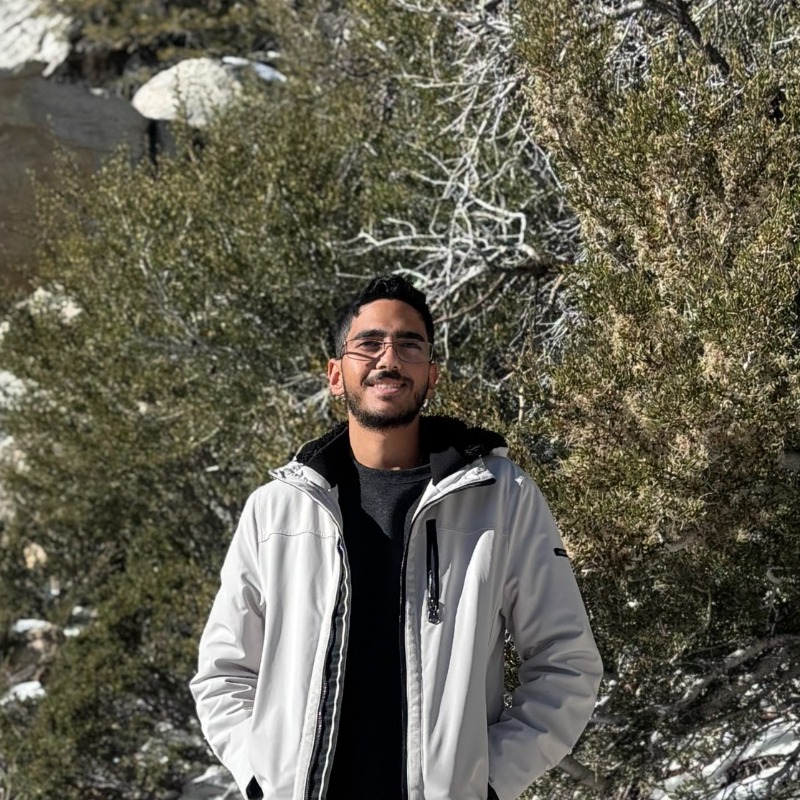
A quick snapshot of who I am and what I'm aiming for.
I'm a Computer Engineering student with a strong interest in computer hardware and digital system design. I enjoy working at the logic and architecture level—designing, analyzing, and testing hardware systems to understand how individual components interact and perform as a whole.
When I work on something, I like to start from what it actually needs to do, keep the constraints in mind, and then test as I go — both in simulation and by hand. I'm especially into digital logic and figuring out how hardware actually behaves.
I'm currently seeking a hardware engineering internship where I can contribute to design and verification work while continuing to build practical experience in computer hardware systems.
Areas I'm actively learning and building toward — driven by curiosity and where the industry is heading.
Learning Verilog/VHDL for digital design and hardware description
Designing and manufacturing PCBs in KiCad for personal projects
Exploring RF communication through FPV drone systems and radio links
Building skills in testing and validating digital designs and circuits
Coursework foundations and current track.
B.S. Computer Engineering (Junior Transfer) • Aug 2025 — Jan 2027 (Expected)
Associate's in Physical Science • Jan 2022 — Aug 2025
Associates degree for Transfer in Physical Science
Associates degree for Transfer in Mathematics
Selected engineering and math courses completed.
Tools and strengths I bring to a team.
I like to keep things simple: figure out what's actually needed, build a quick prototype, test it early, and fix it from there. I try to communicate clearly, write down what I change, and keep my projects organized.
Roles that built my operations, communication, and technical troubleshooting skills.
Lock and Roll Locksmith • Feb 2025 — Present
Office Depot • Oct 2023 — Feb 2025
Professional credentials and completed training.
Selected labs and builds showcasing digital logic design and software engineering skills.
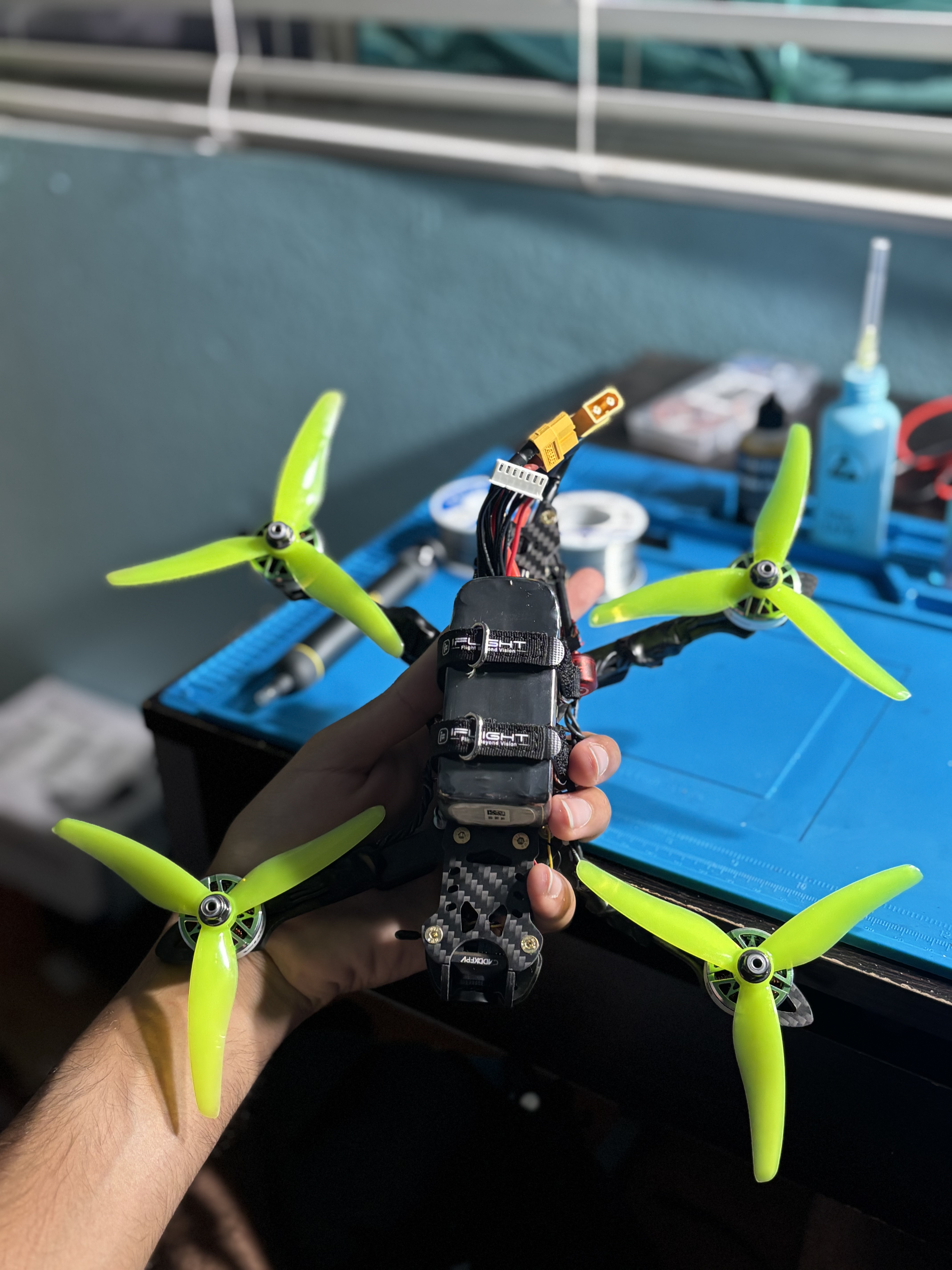
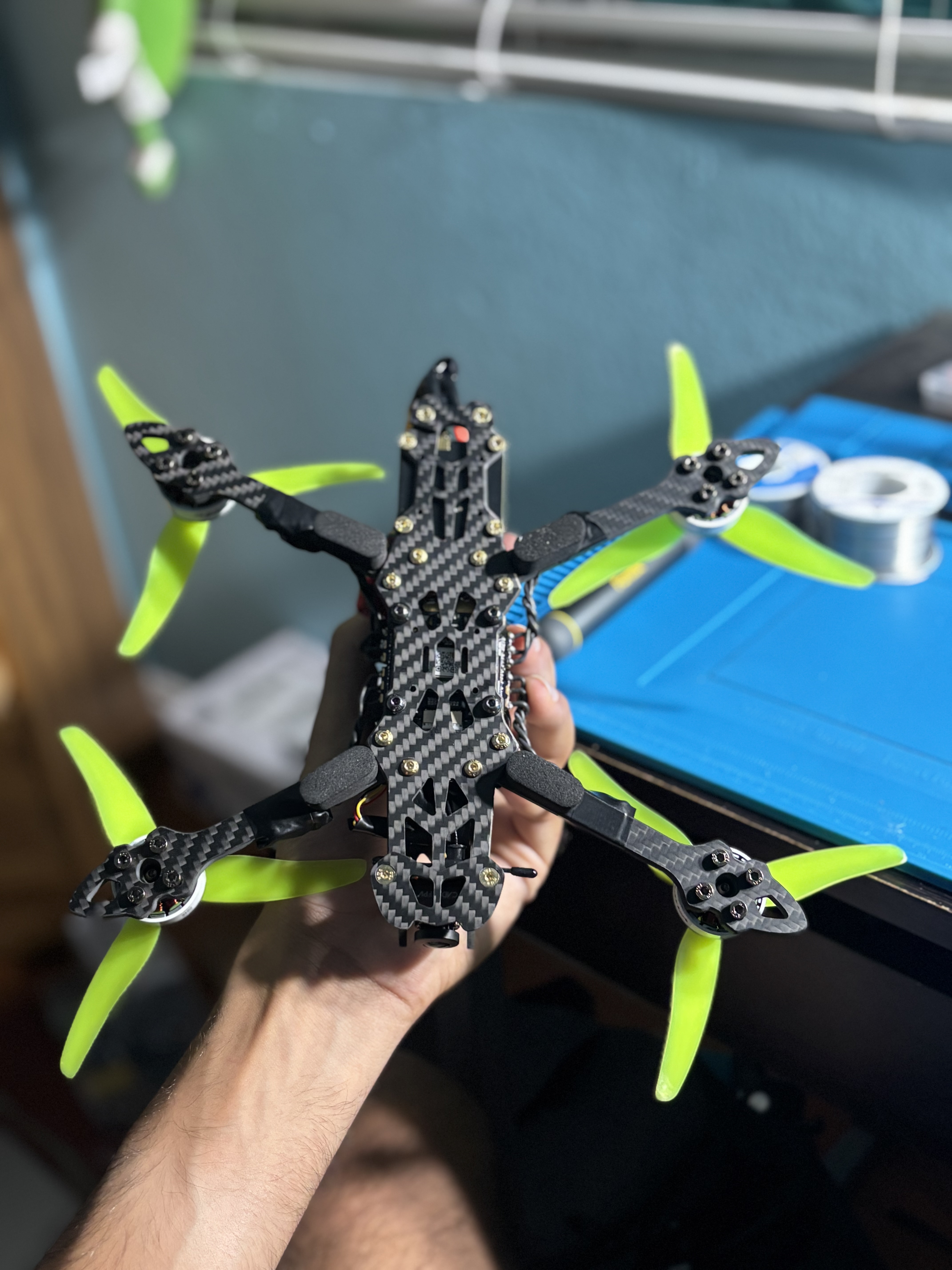
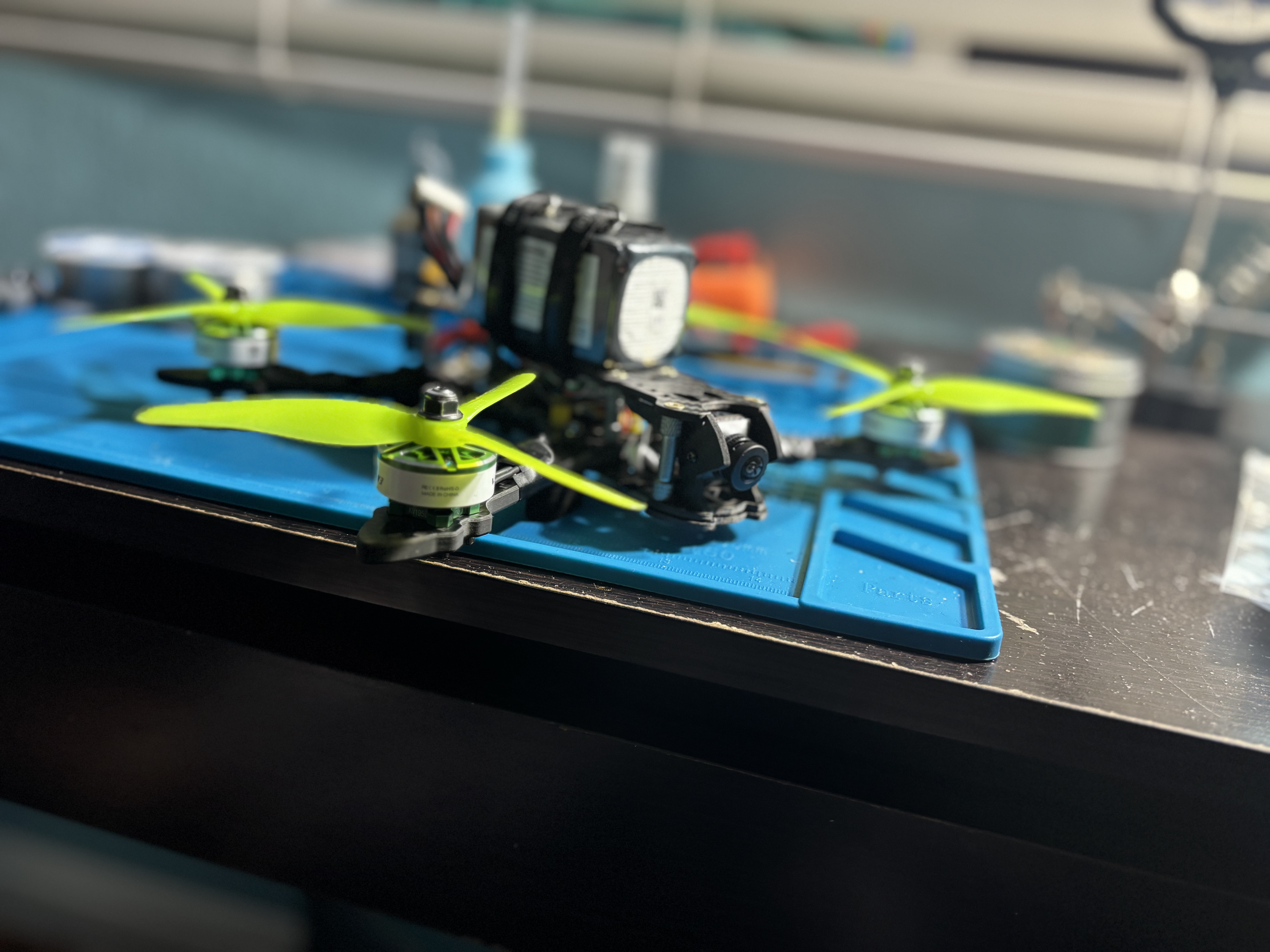
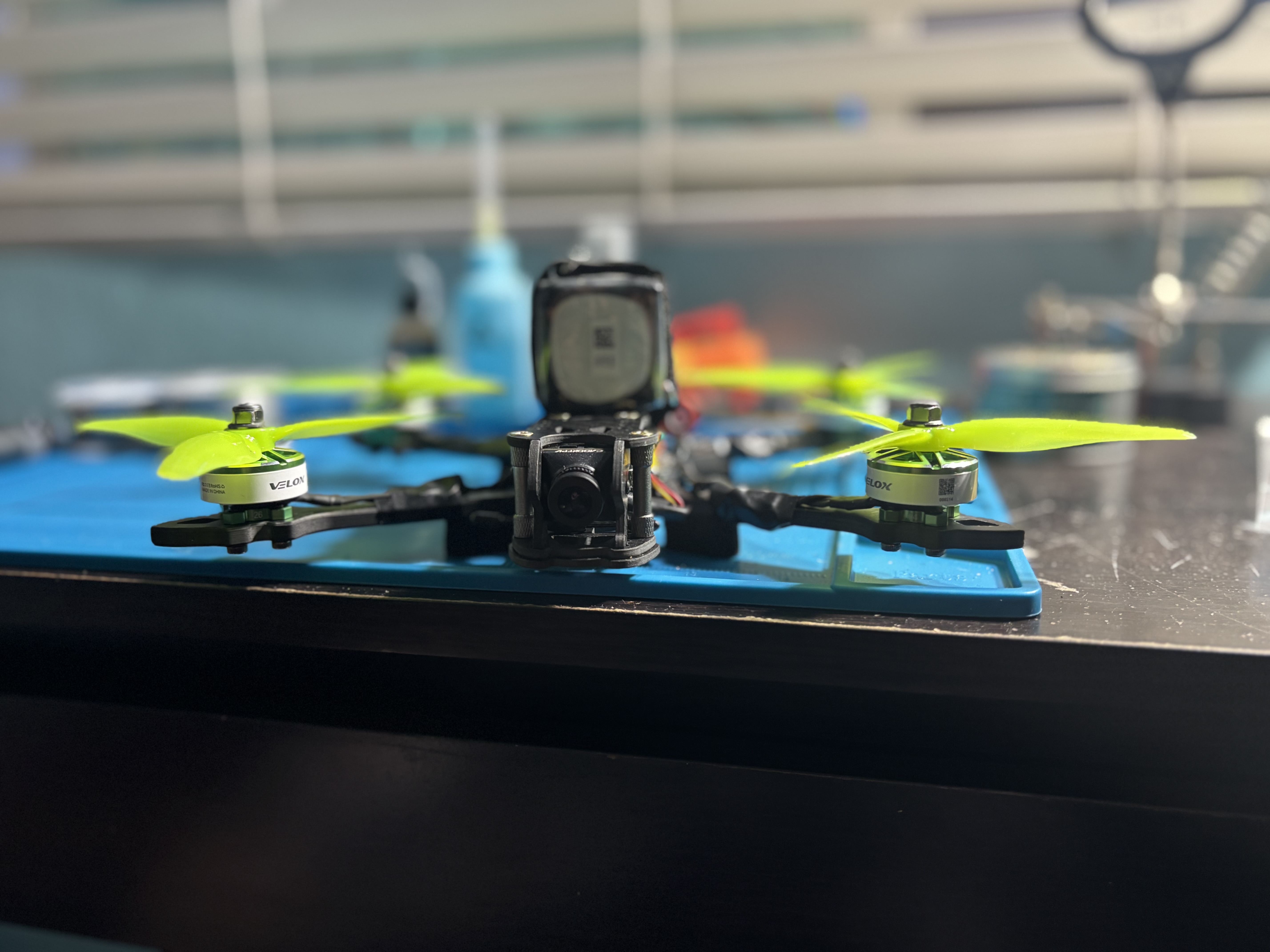
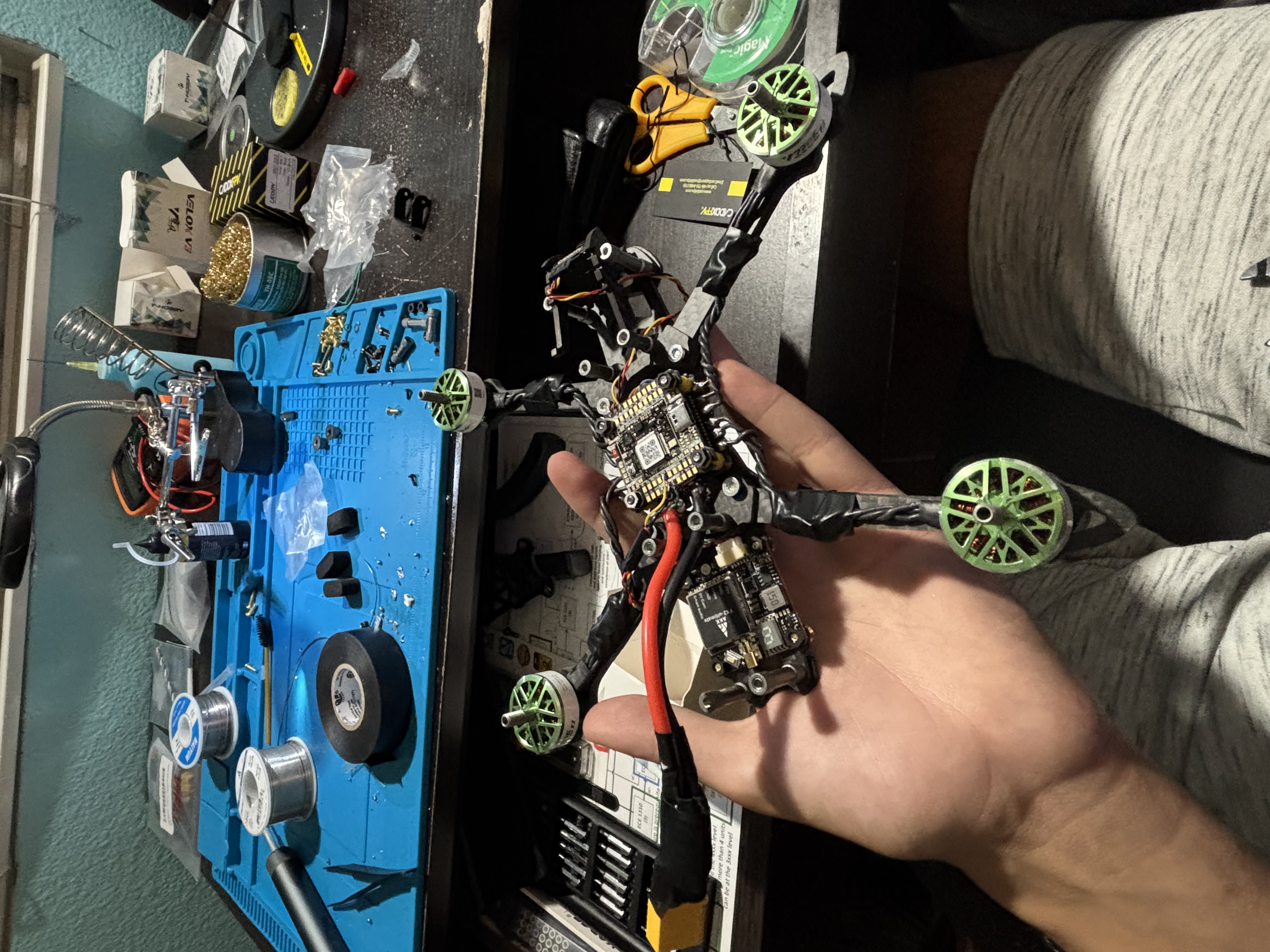
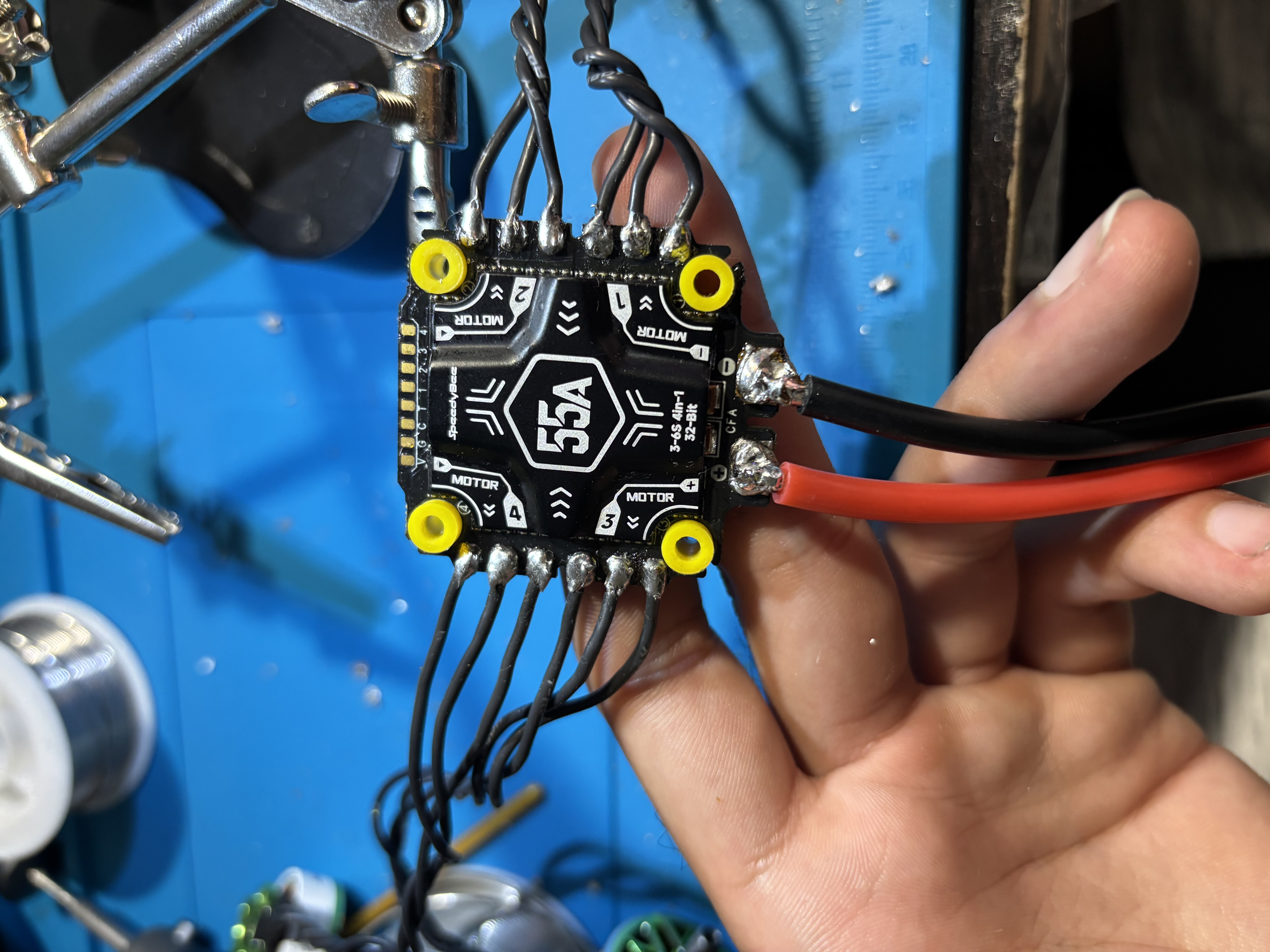
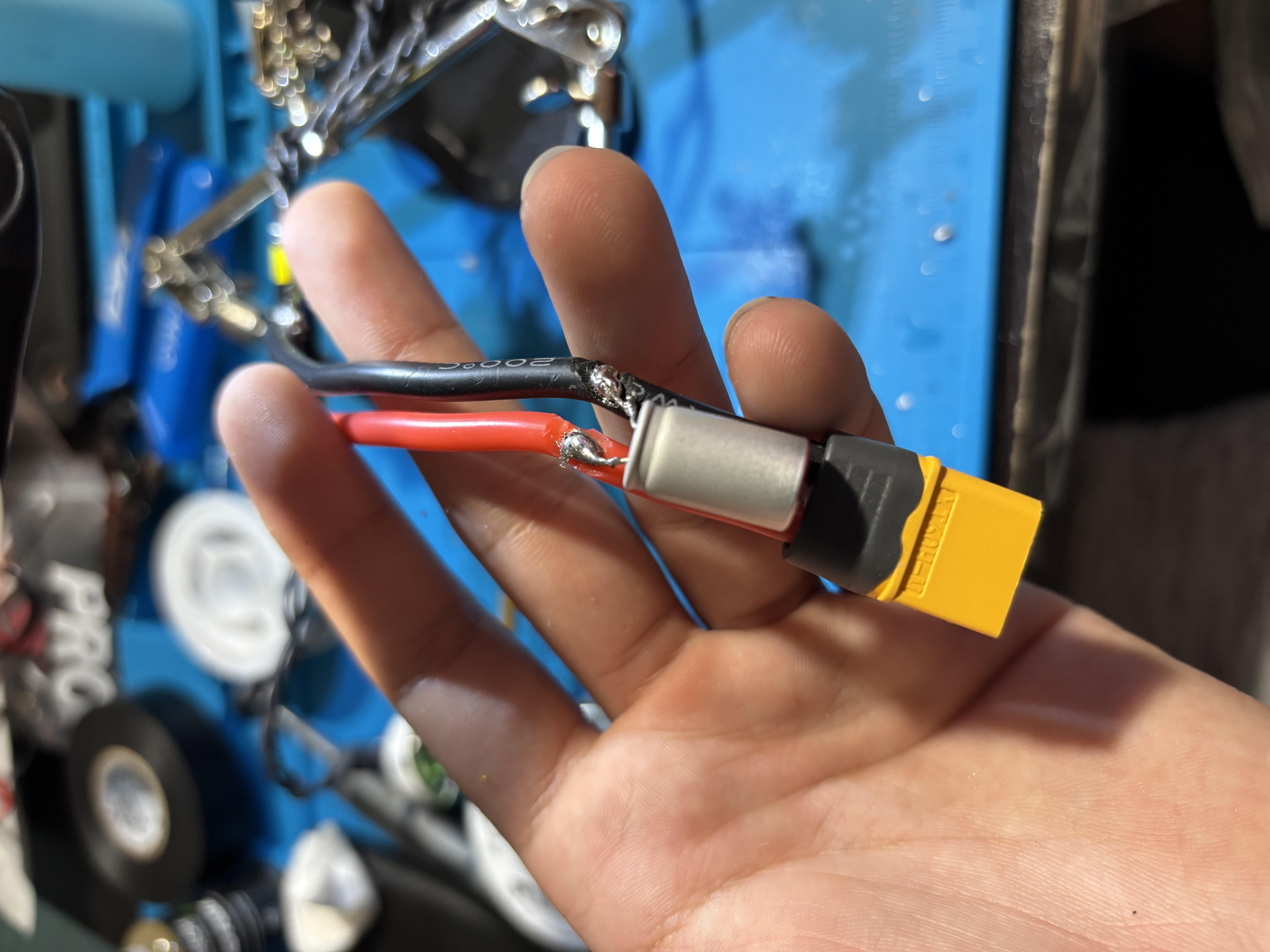
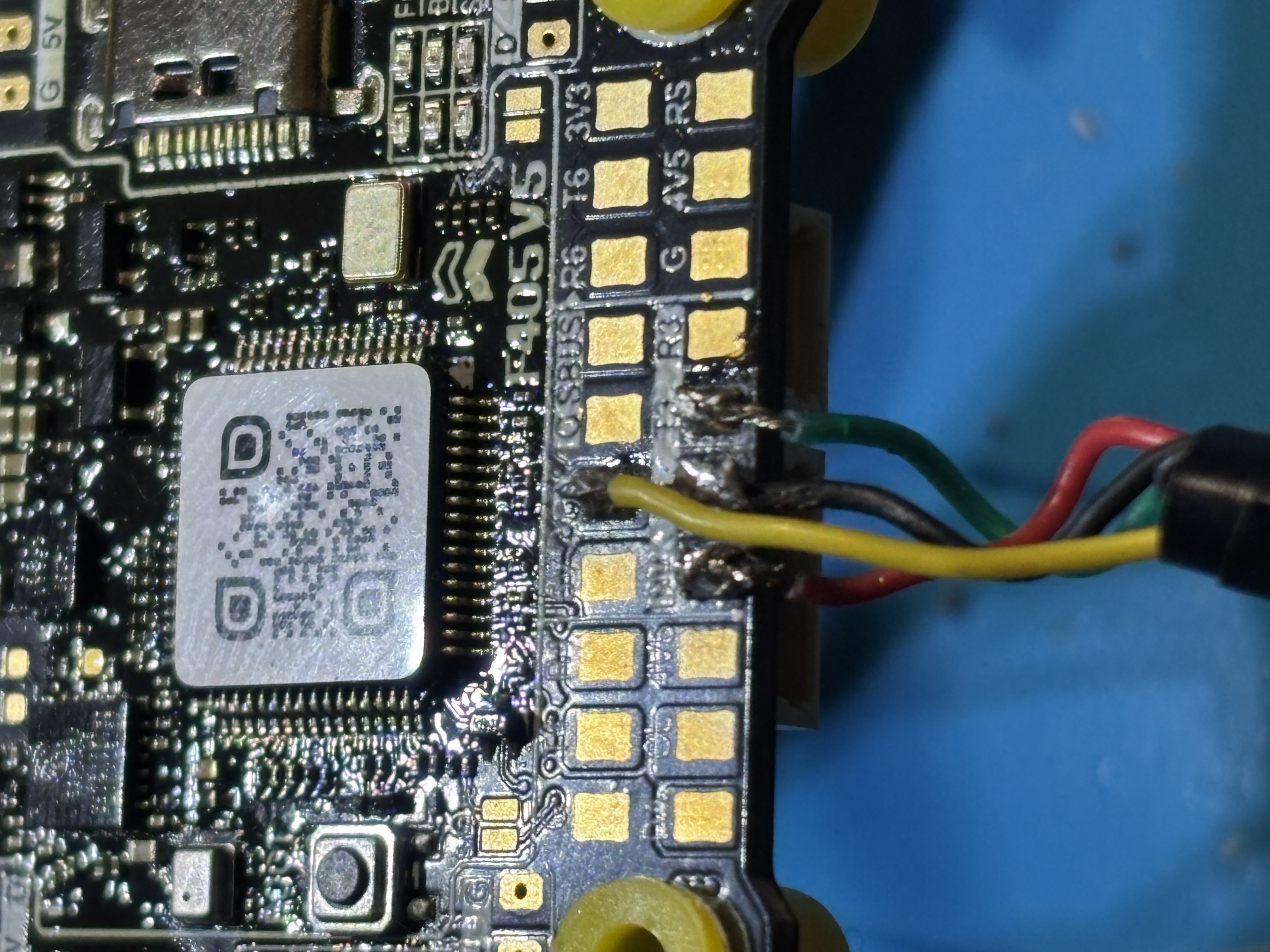
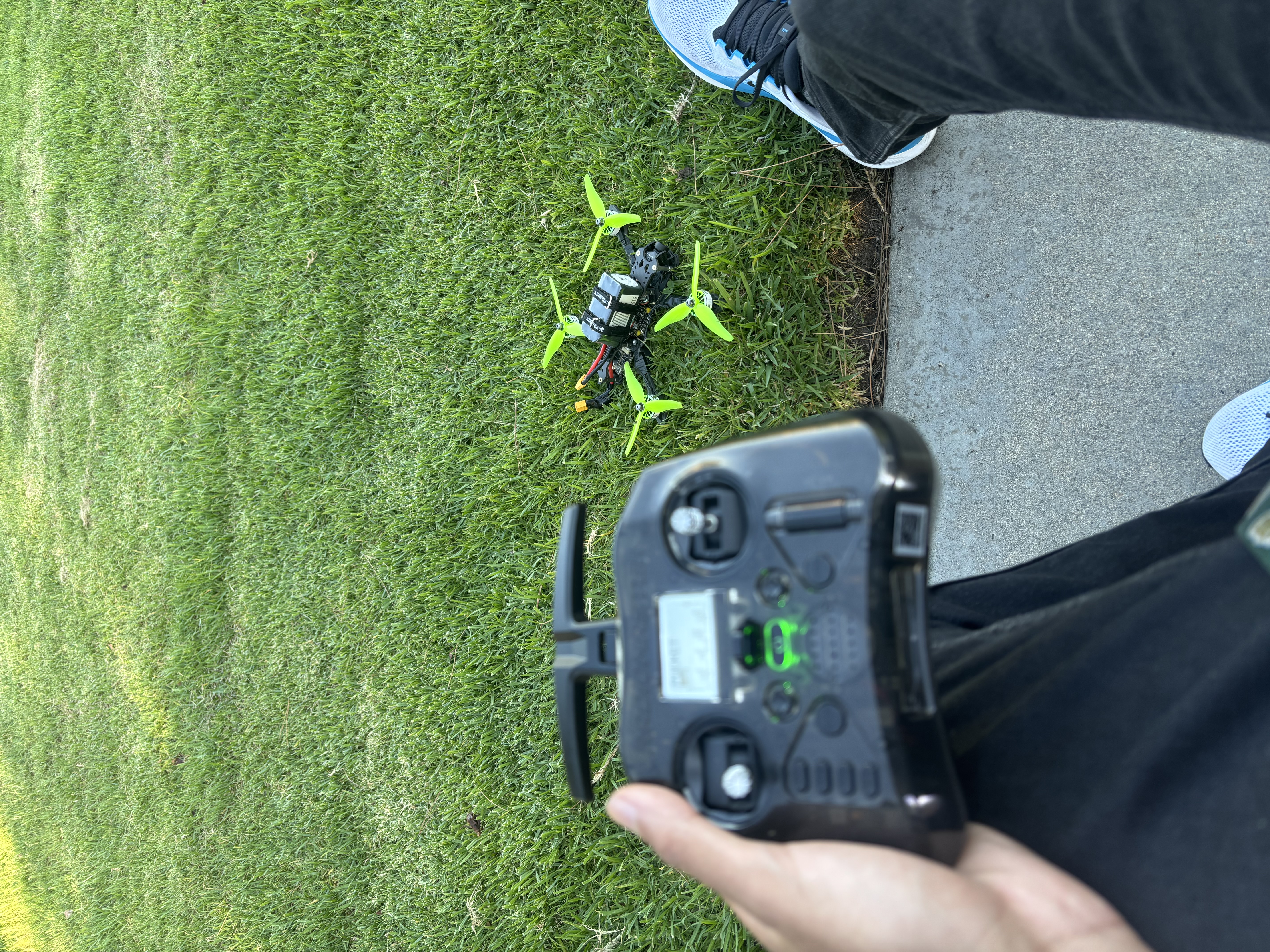
This was my first time building a drone. Instead of buying one ready to fly, I put together a 6S 5-inch analog FPV quad from individual parts so I could actually learn how it all works. I picked the components, soldered everything together, set it up in Betaflight, and tested it on the bench. It runs the whole signal chain — from the radio and flight controller out to the motors, and from the camera through the video transmitter to my goggles — and I used a smoke stopper and a multimeter to check things safely as I went.
My goal was to get a working 6S 5-inch analog FPV quad that could take radio input, send live video to my goggles, arm safely, and spin its motors the right way. Since it was my first build, I didn't want to just bolt parts together — I wanted to understand each piece. So I picked compatible parts, soldered the power, signal, and video wiring myself, set everything up in Betaflight, got ELRS radio control working, checked the analog video, and used a smoke stopper and multimeter to bring each part online without frying anything.
I'm studying Computer Engineering and want to go into electrical and computer engineering, so I wanted hands-on experience with the parts a ready-to-fly drone hides — soldering, UART wiring, RF and analog video, battery safety, and figuring out why something isn't working. Building it from parts forced me to learn how every piece connects to the flight controller, and how one bad solder joint or wrong setting can keep the whole thing from working.
These are the parts I picked for the build — the airframe and electronics on the flight side, plus the test and safety gear I used while putting it together and getting it running.
Used a smoke stopper the first time I powered it on so it would catch a short or any weird current draw before I plugged the LiPo straight into the stack.
Had to figure out which UART each part was wired to and fix the cases where the receiver or VTX wouldn't talk because the port was set up wrong.
Spun the motors with the props off, then sorted out the motor directions, the reversed-motor settings, and which way the props go so everything matched.
The RX antenna got damaged, so I had to decide whether to repair it or just swap in a compatible UFL 2.4 GHz antenna to keep my range and avoid failsafes.
Wired the camera into the VTX and put the VTX and goggles on the same band and channel, then confirmed the picture only reaches the goggles through the VTX.
Learned to read what the smoke stopper was doing during throttle tests, and that you shouldn't do high-throttle runs through the limiter.
The biggest thing I learned is that building a drone isn't just connecting parts — I had to check each part on its own before I could trust the whole thing. The receiver, flight controller, ESC, motors, VTX, camera, battery, and firmware settings all depend on each other, and one wrong wire or setting could stop it from arming, reading my sticks, showing video, or spinning the motors right. Working through that gave me real experience on both the hardware and software side, and it taught me to test in order: check for shorts first, power up the low-current electronics, make sure everything is talking, then move toward testing the full drone.
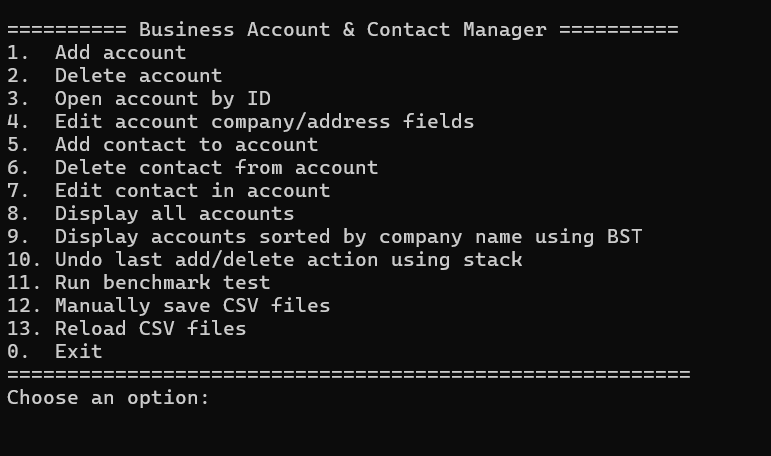
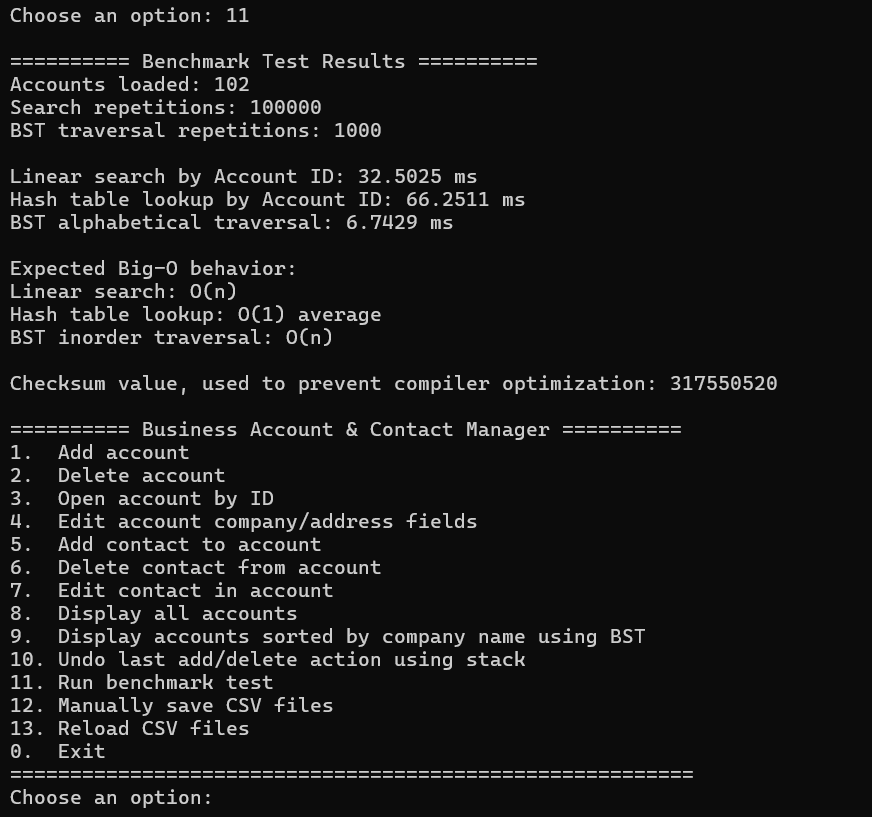
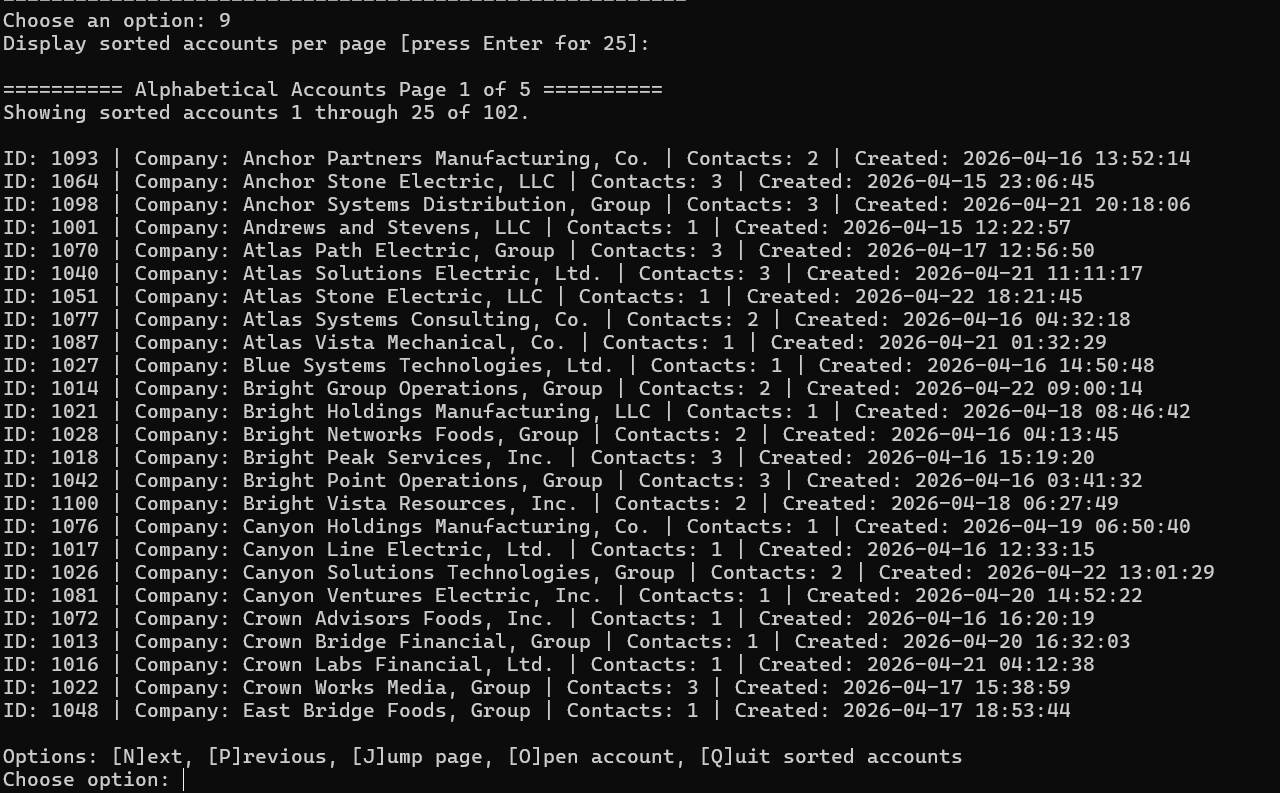
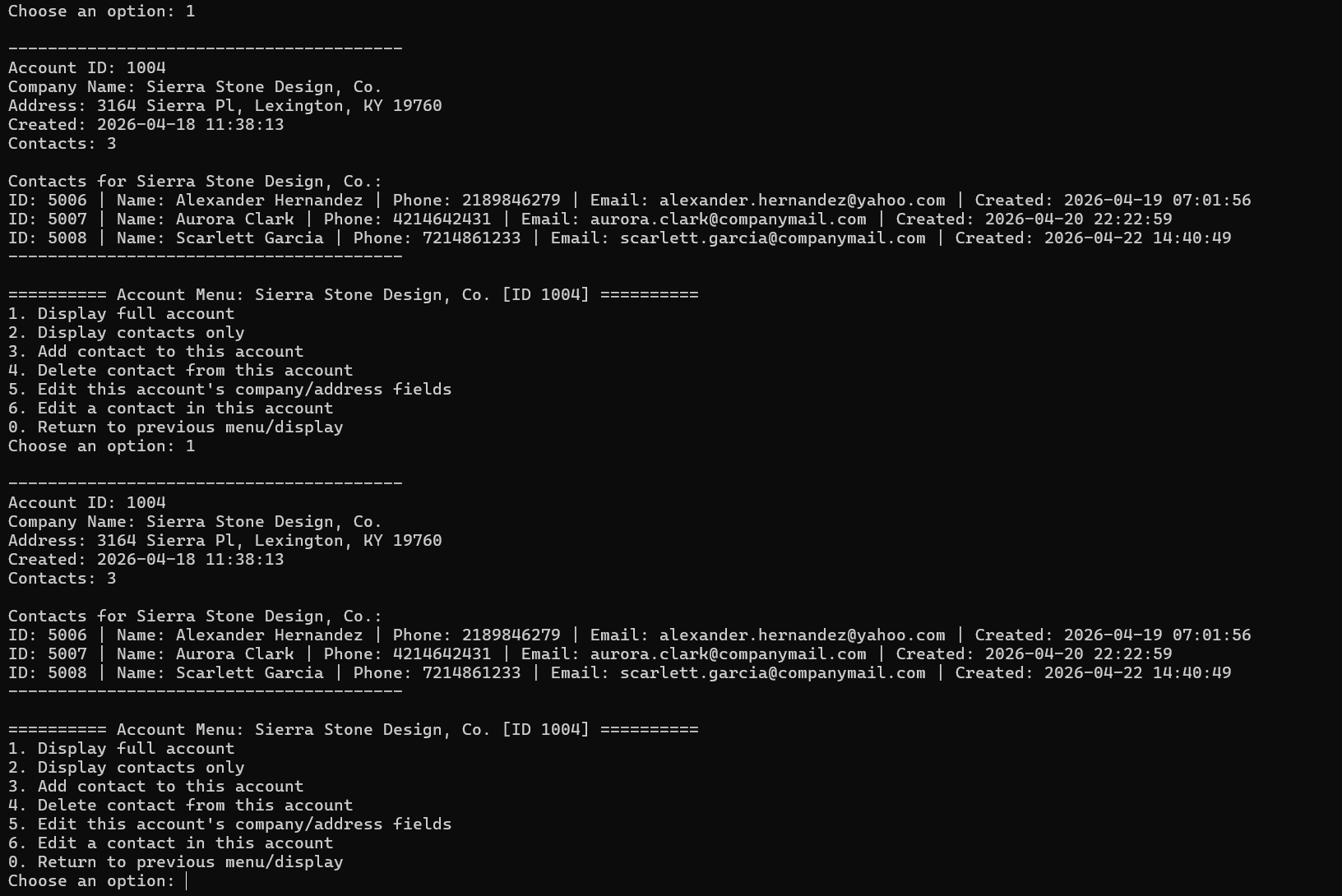
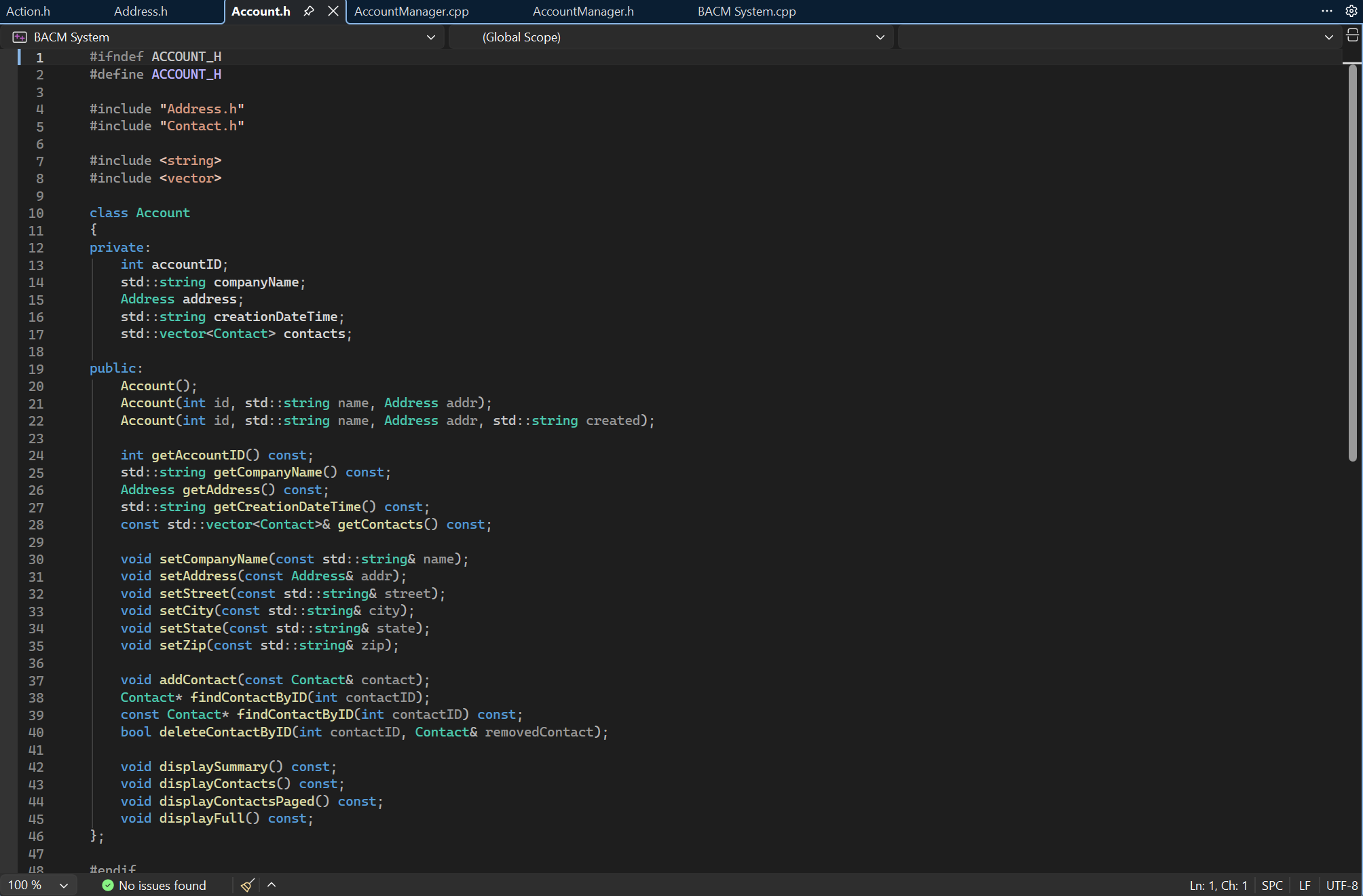
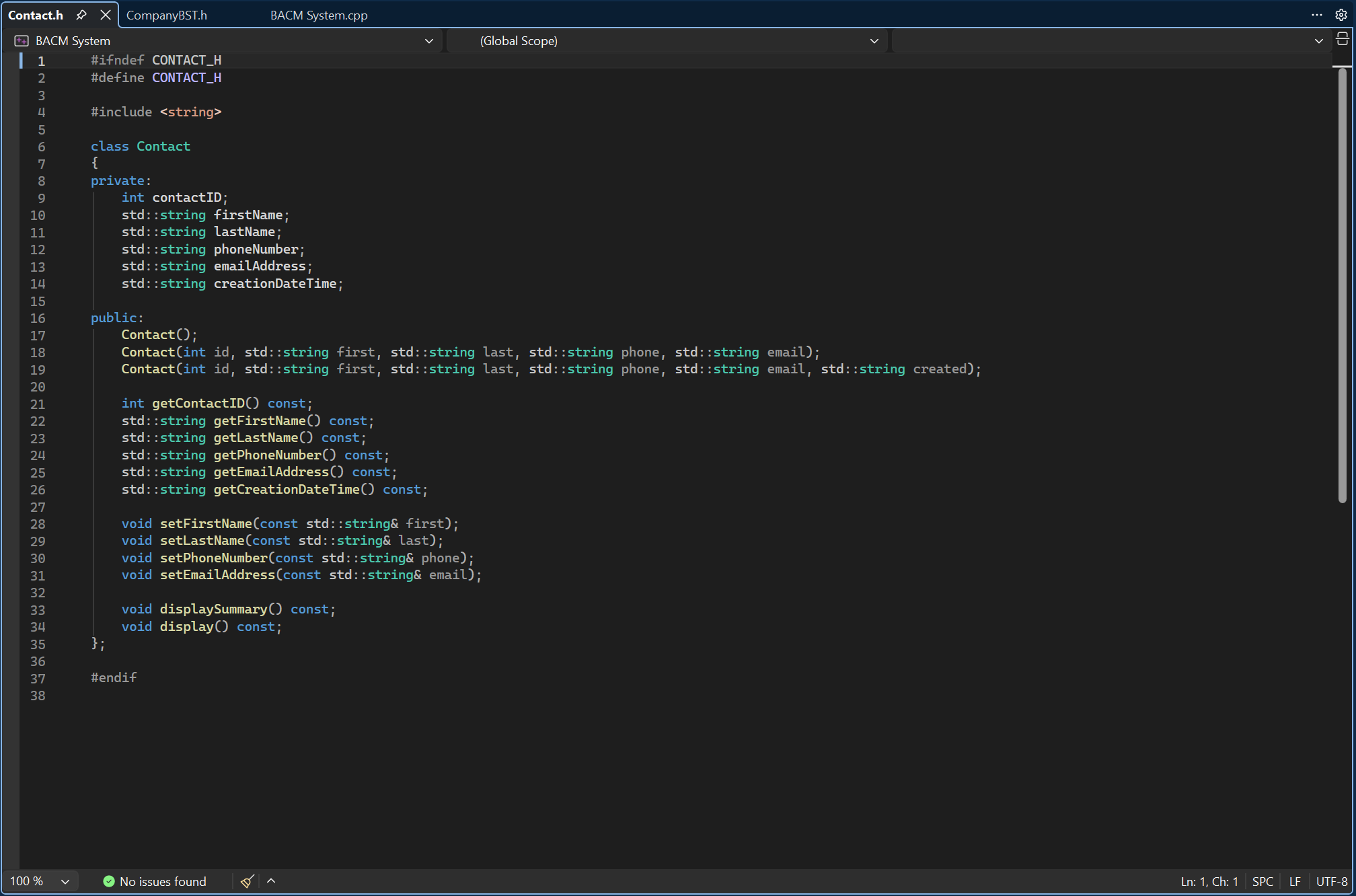
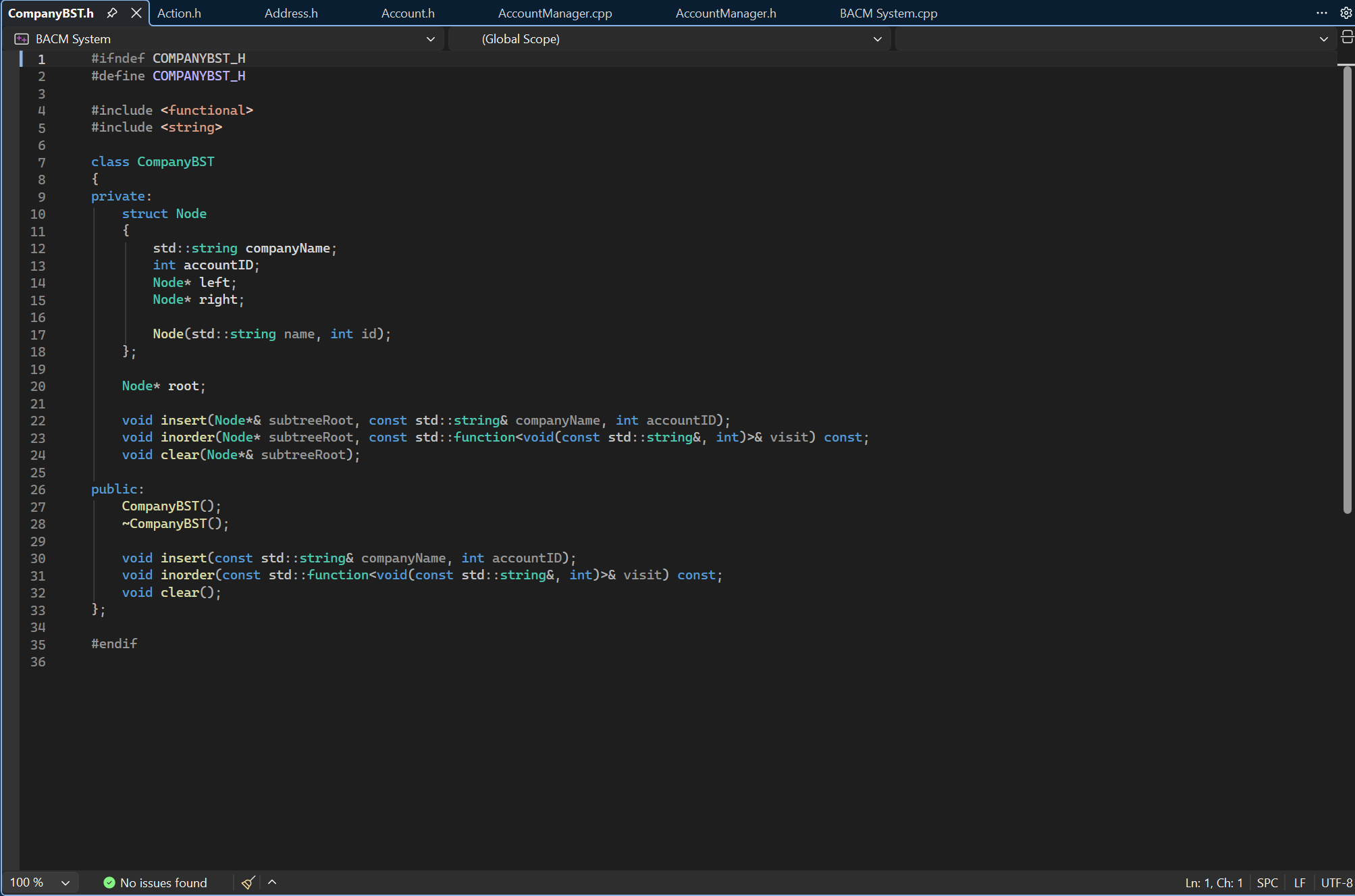
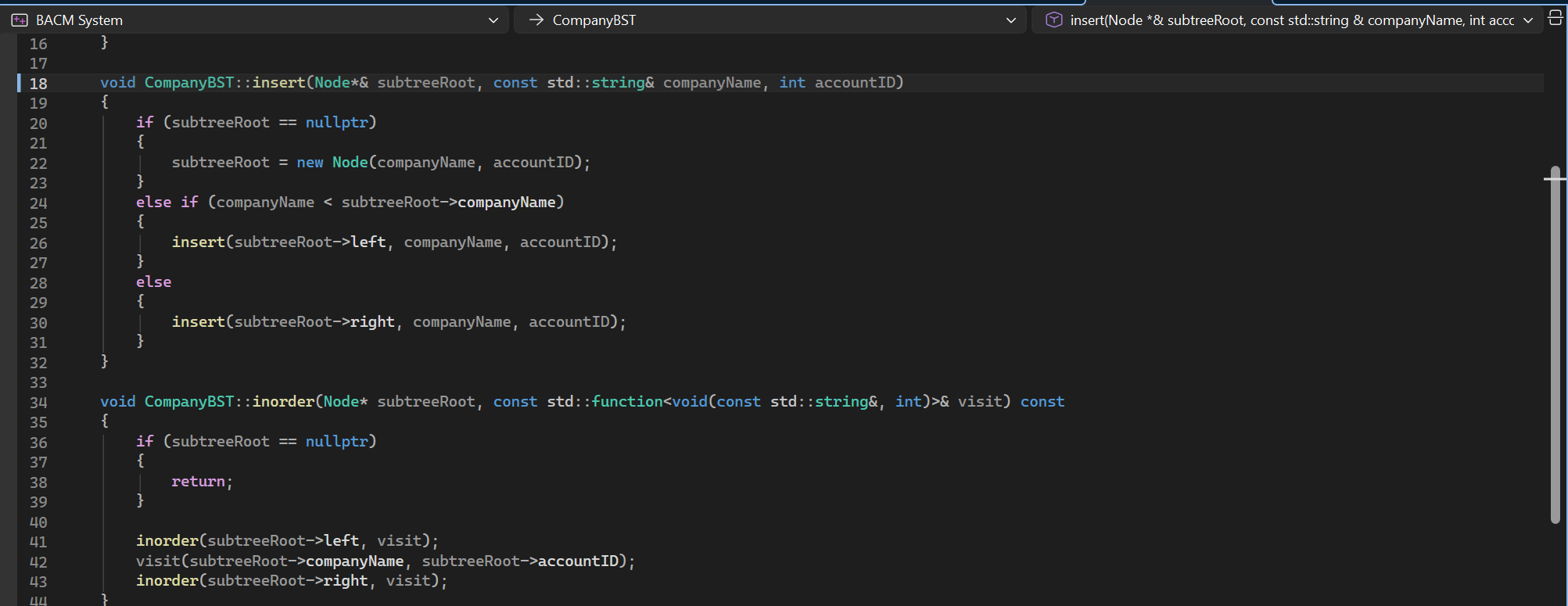
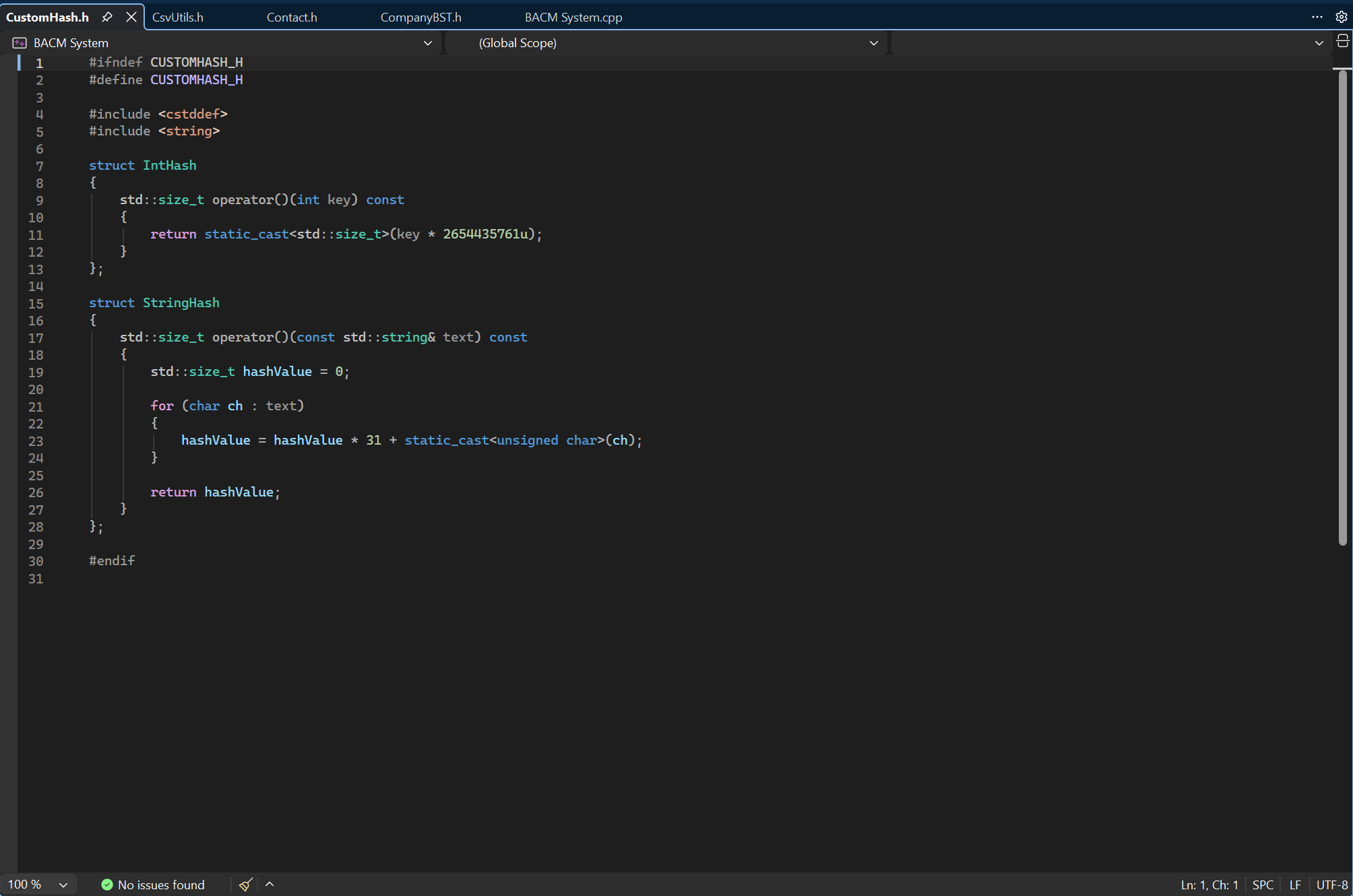
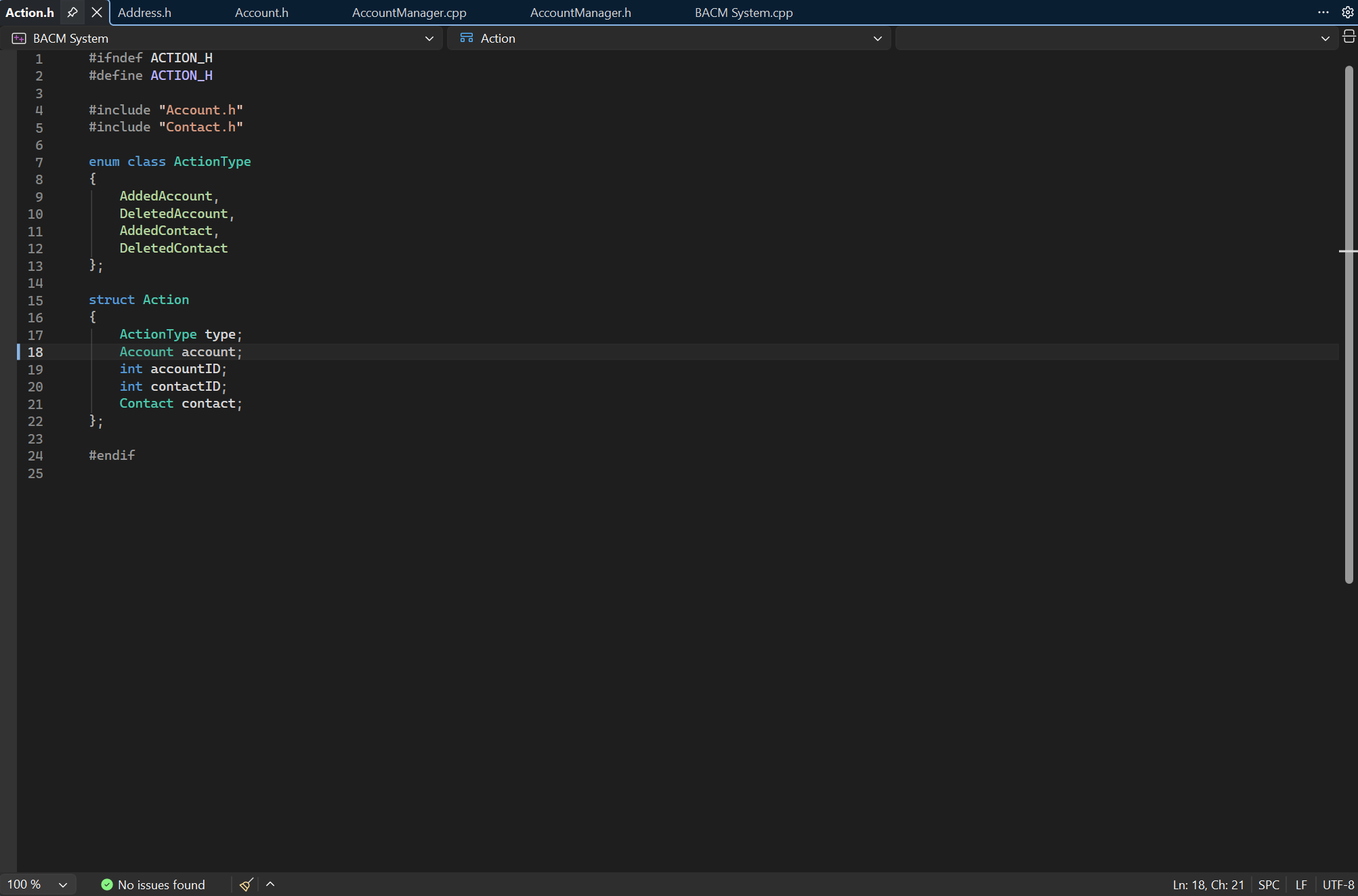
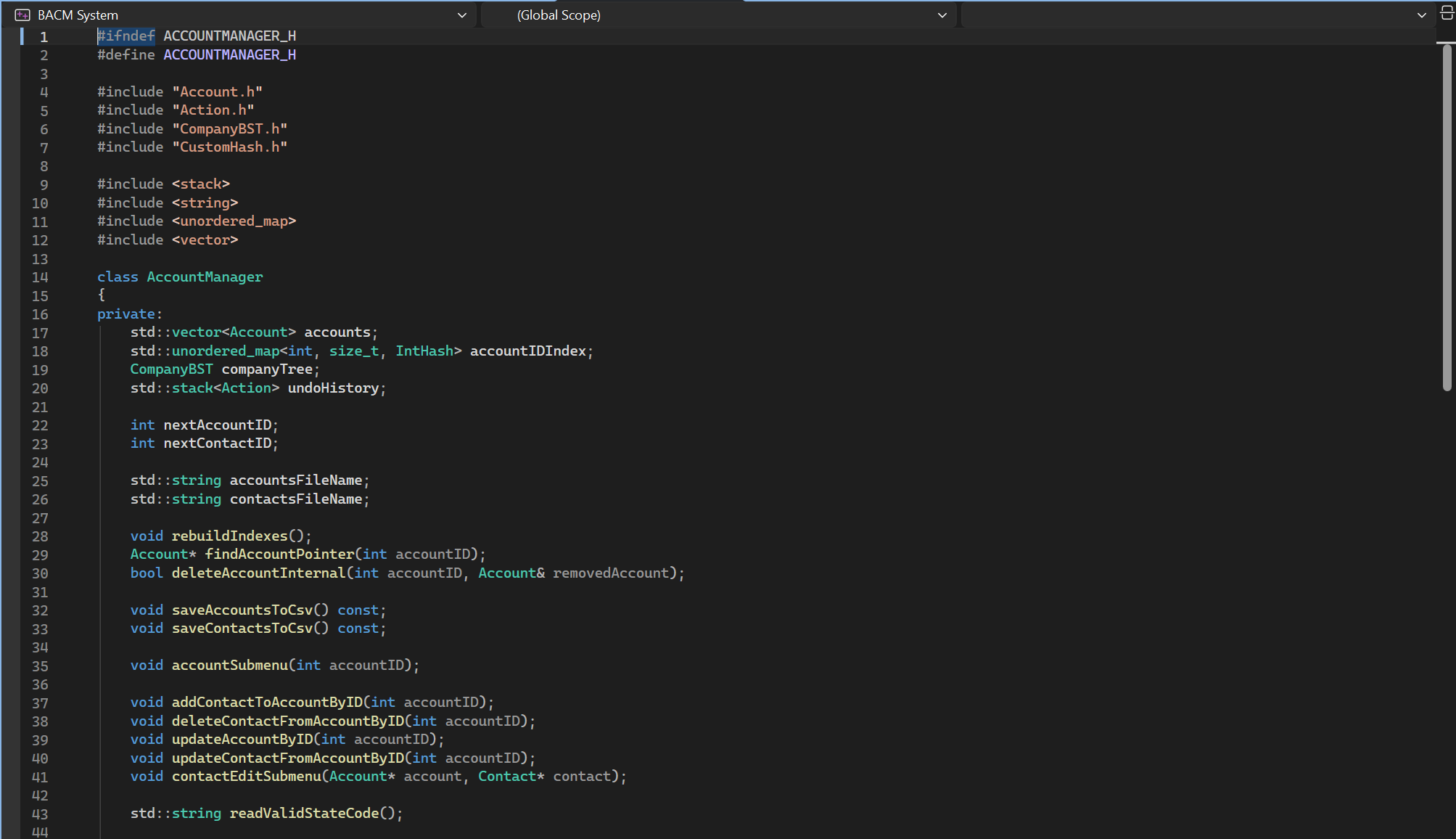
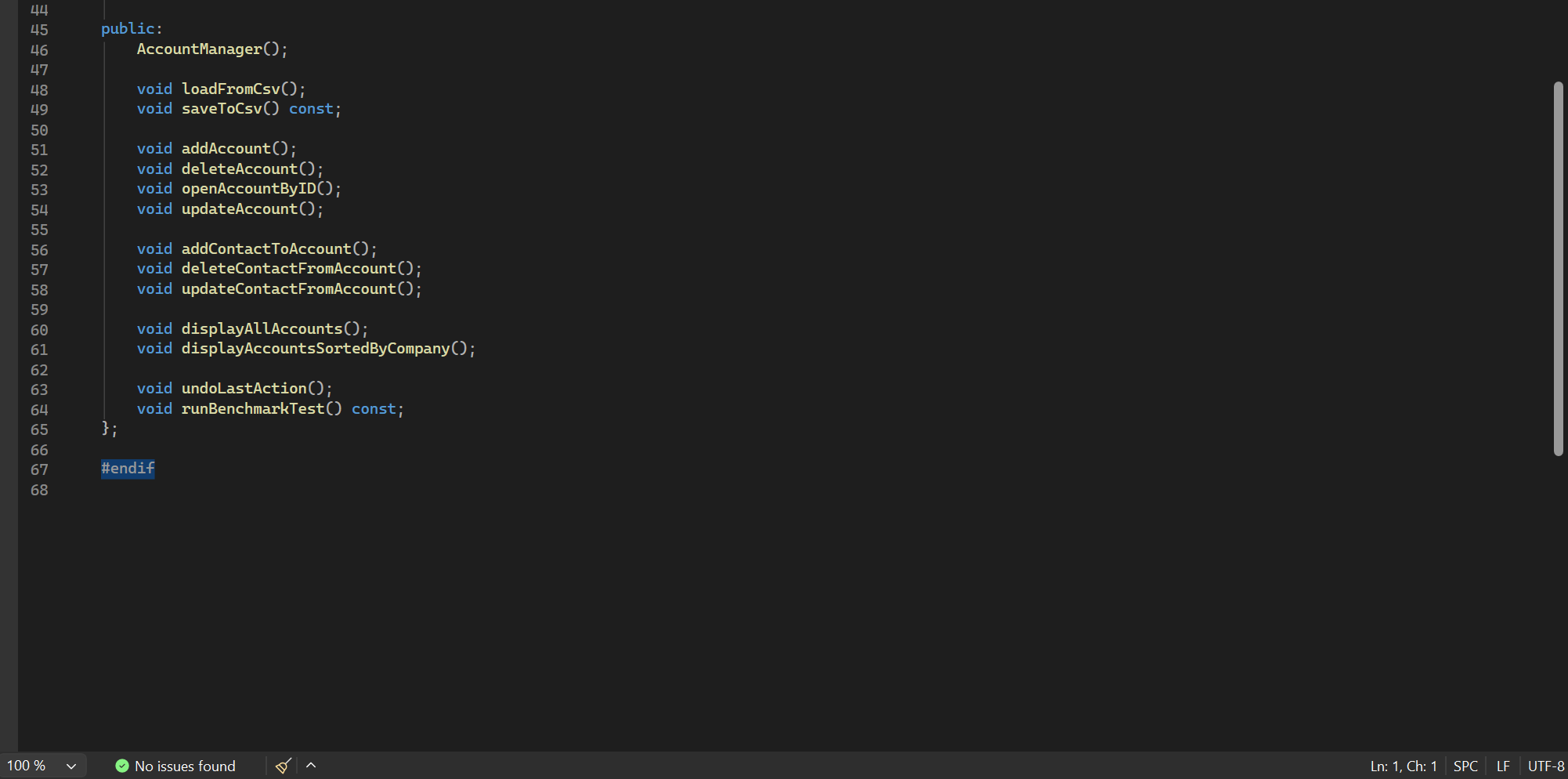
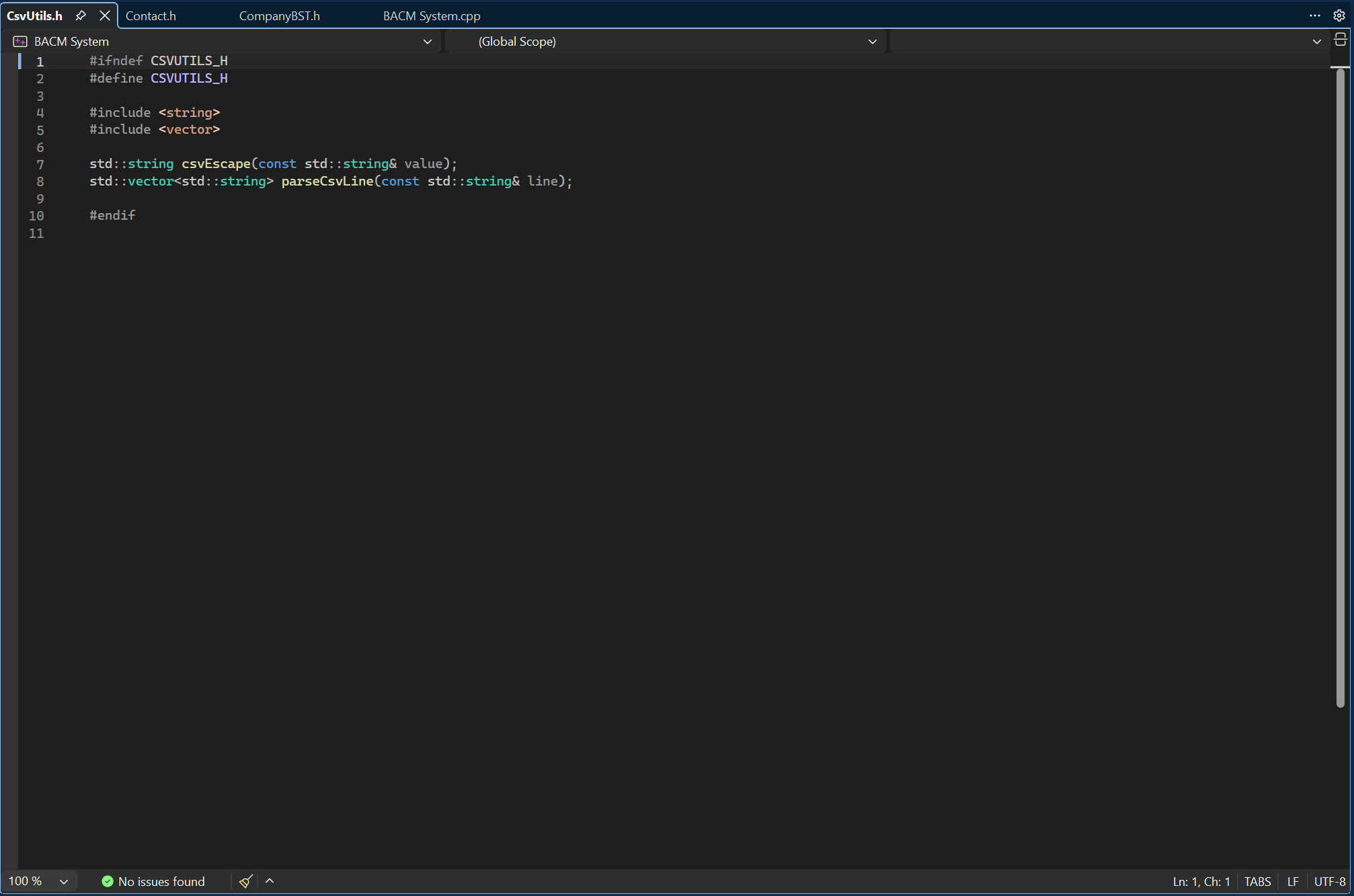
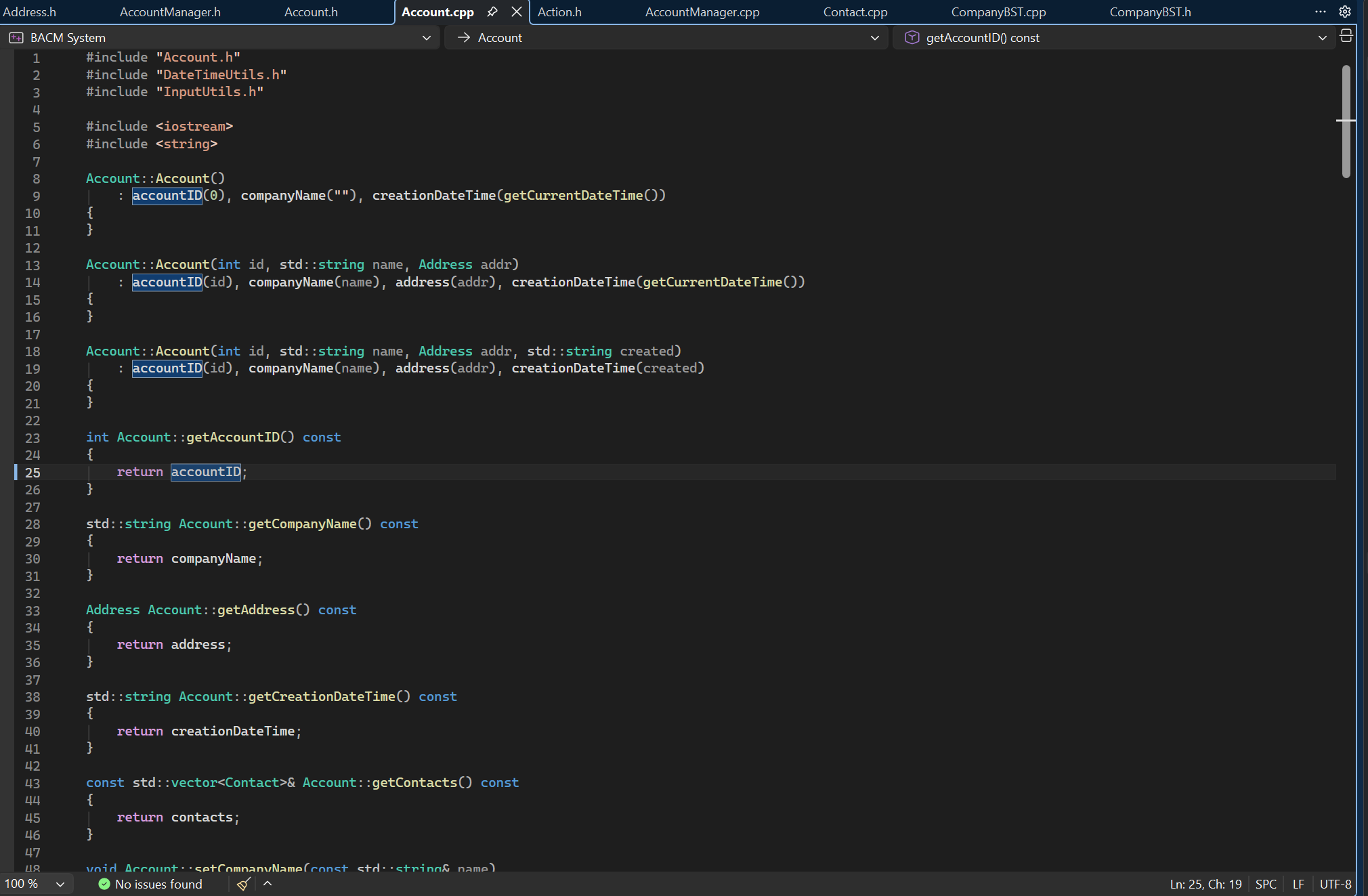
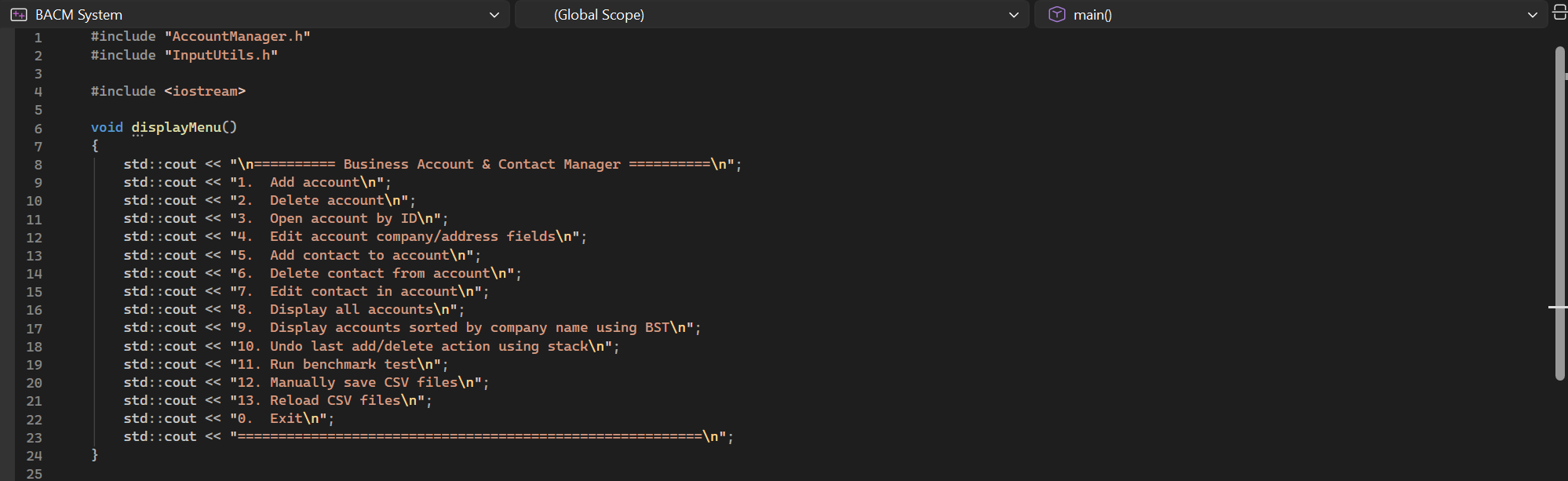
Built a C++ system for managing business accounts and contacts with full CRUD operations, search, sort, pagination, CSV persistence, and undo functionality. Implemented BST-based alphabetical sorting and benchmarked linear search, hash lookup, and tree traversal to compare efficiency across data structures.
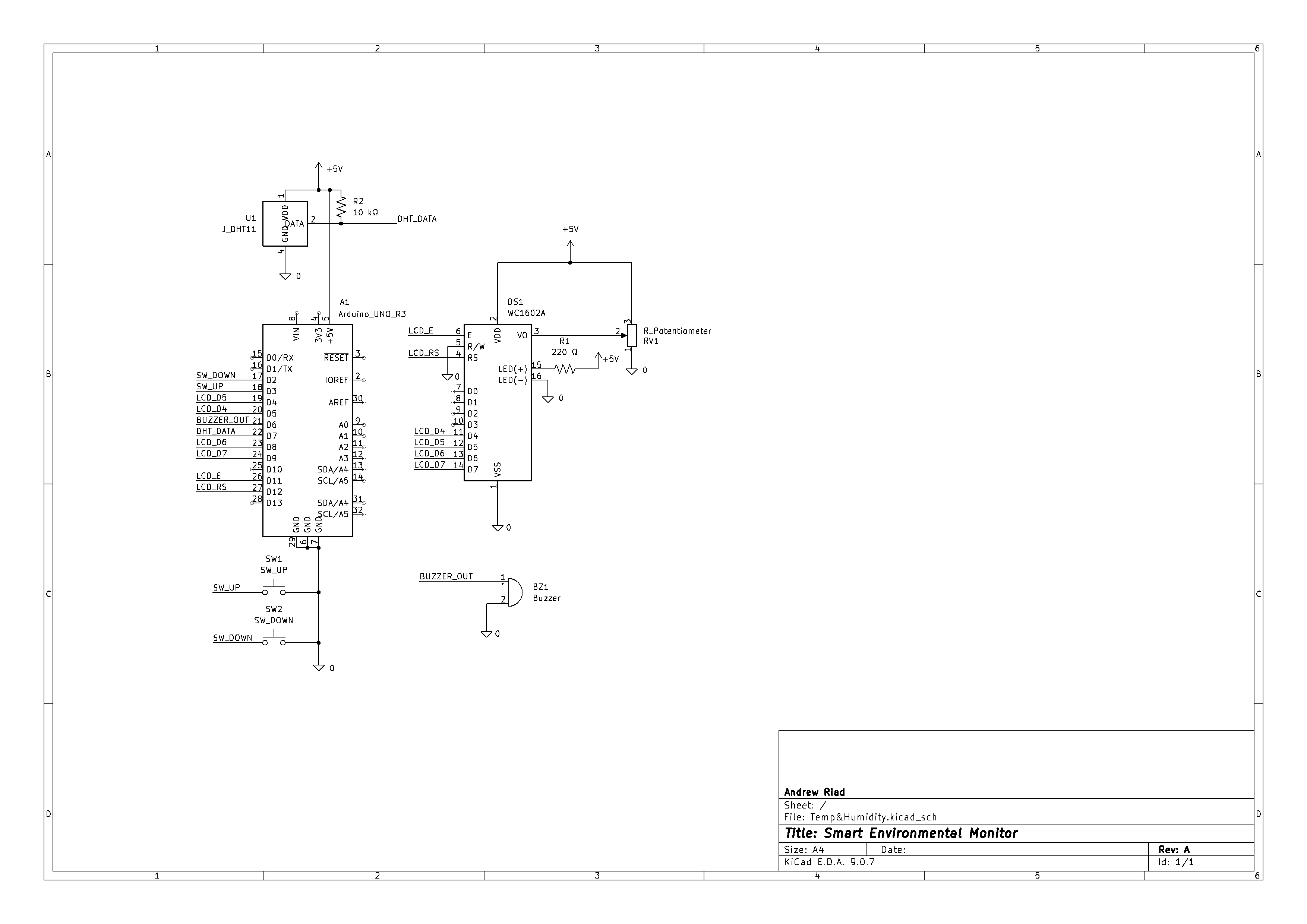
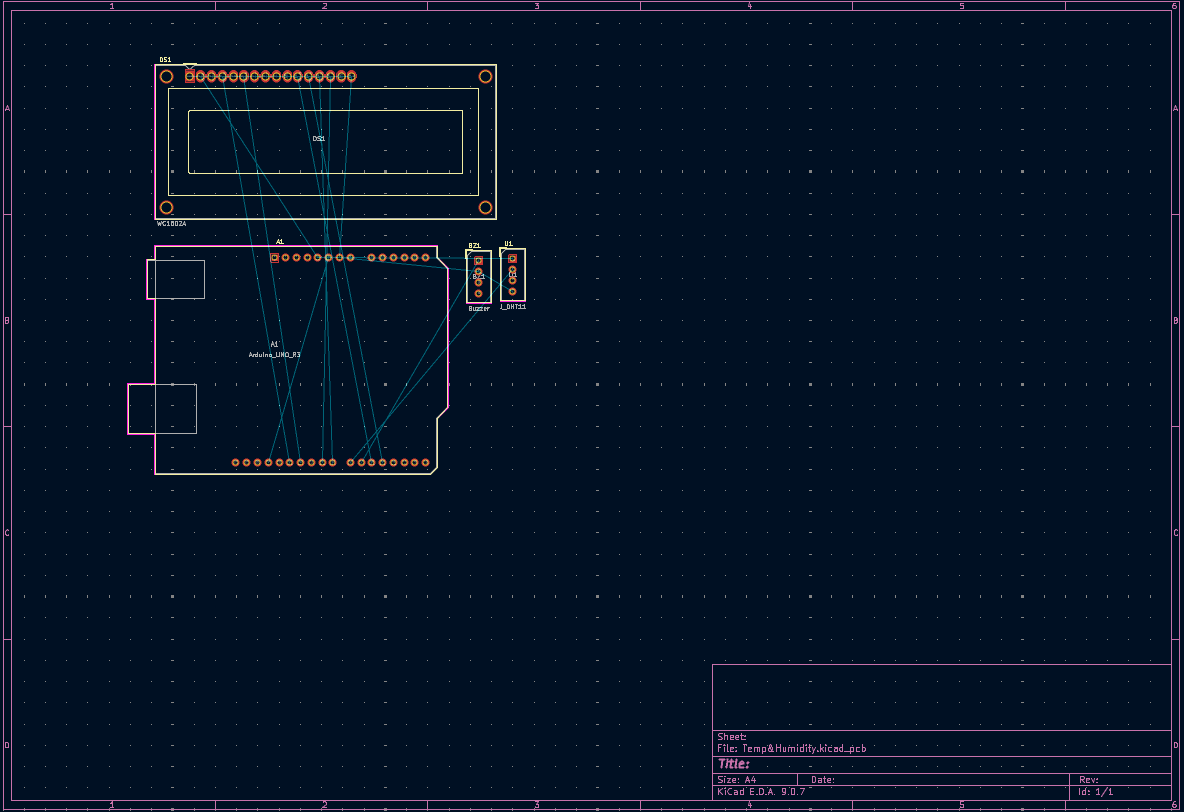
A smart environmental monitor built around an Arduino UNO and DHT11 sensor. Reads temperature and humidity data and displays readings on a 16×2 LCD. Features user-adjustable thresholds via push buttons and a buzzer alarm. Includes a custom PCB designed in KiCad.
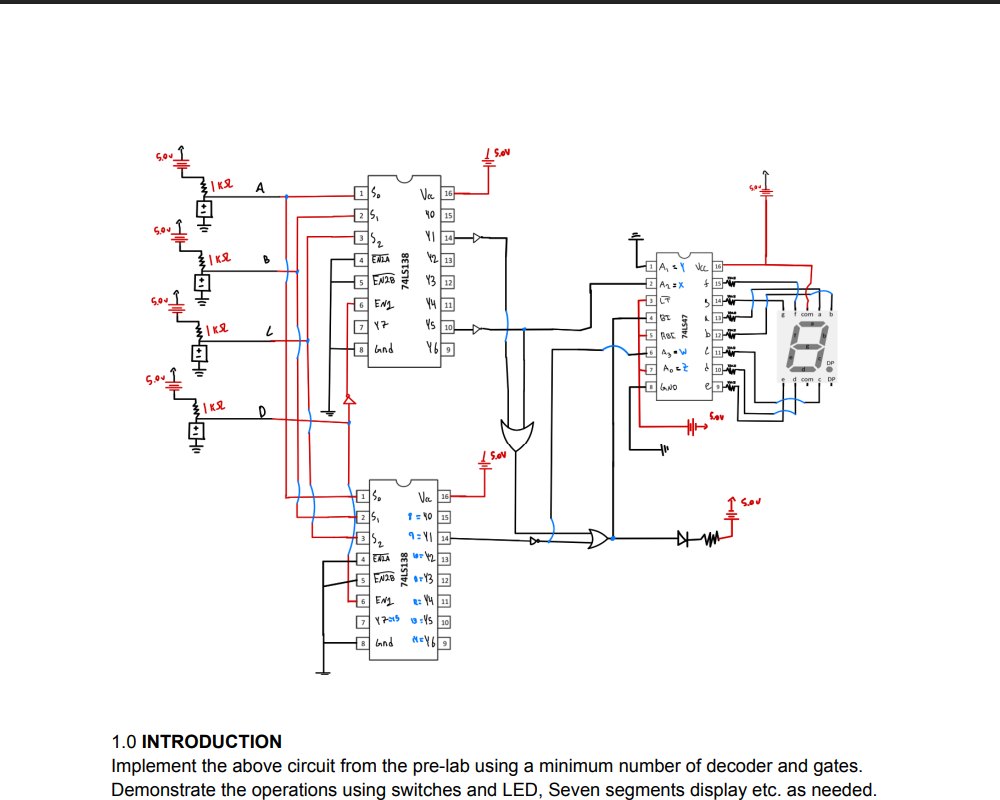
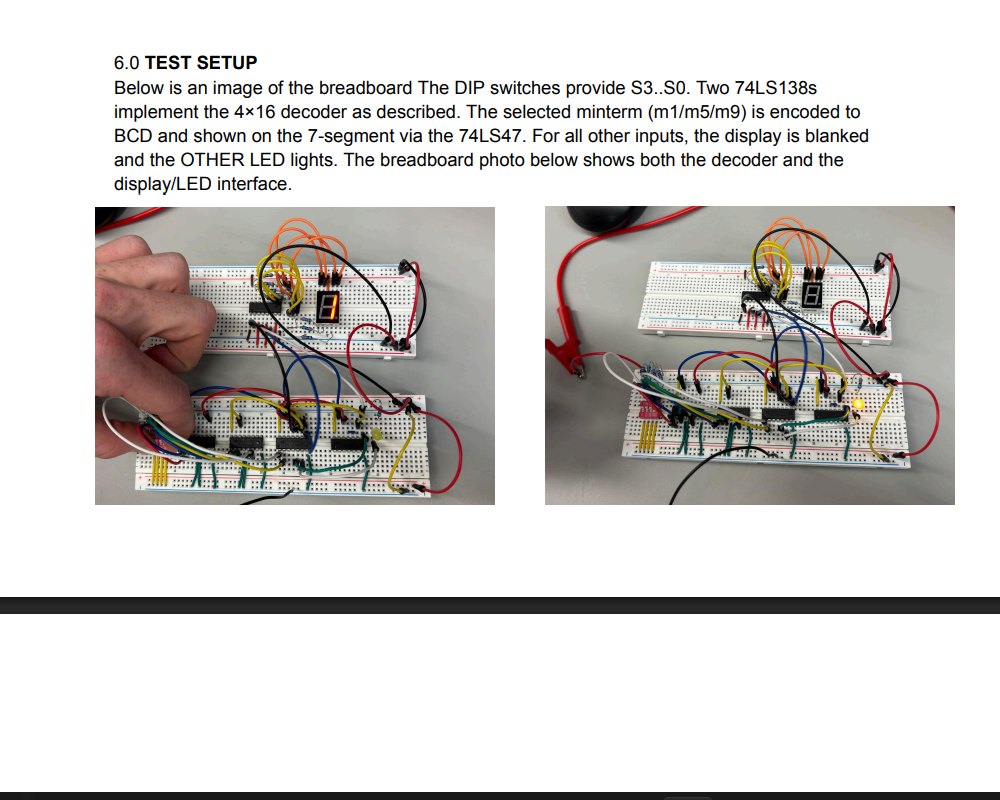
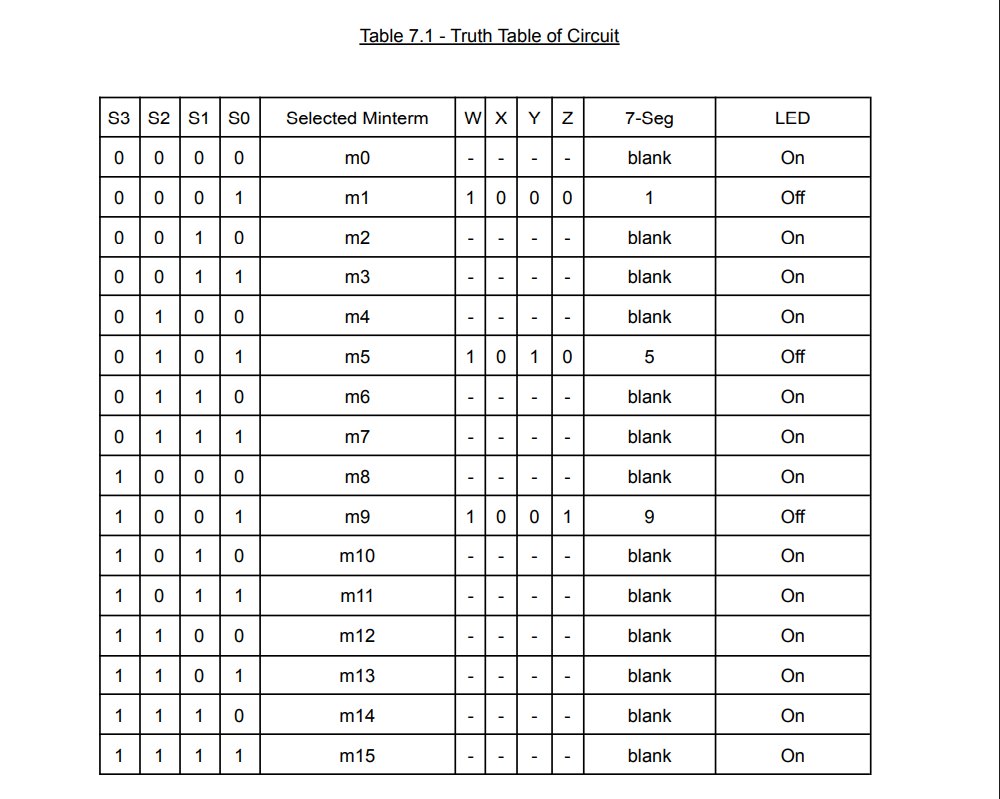
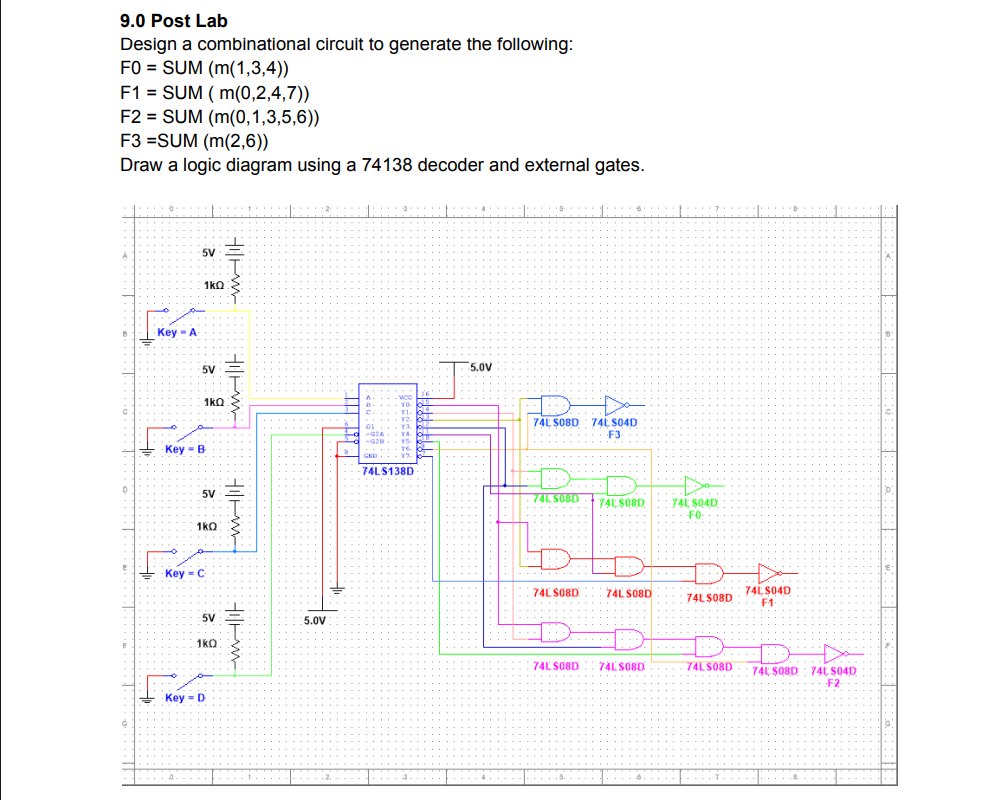
Designed a 4×16 decoder using two 3-to-8 decoders and minimal logic. Generated minterms 1/5/9 and drove a seven-segment display; blanked the display and lit an “OTHER” LED for all other inputs.
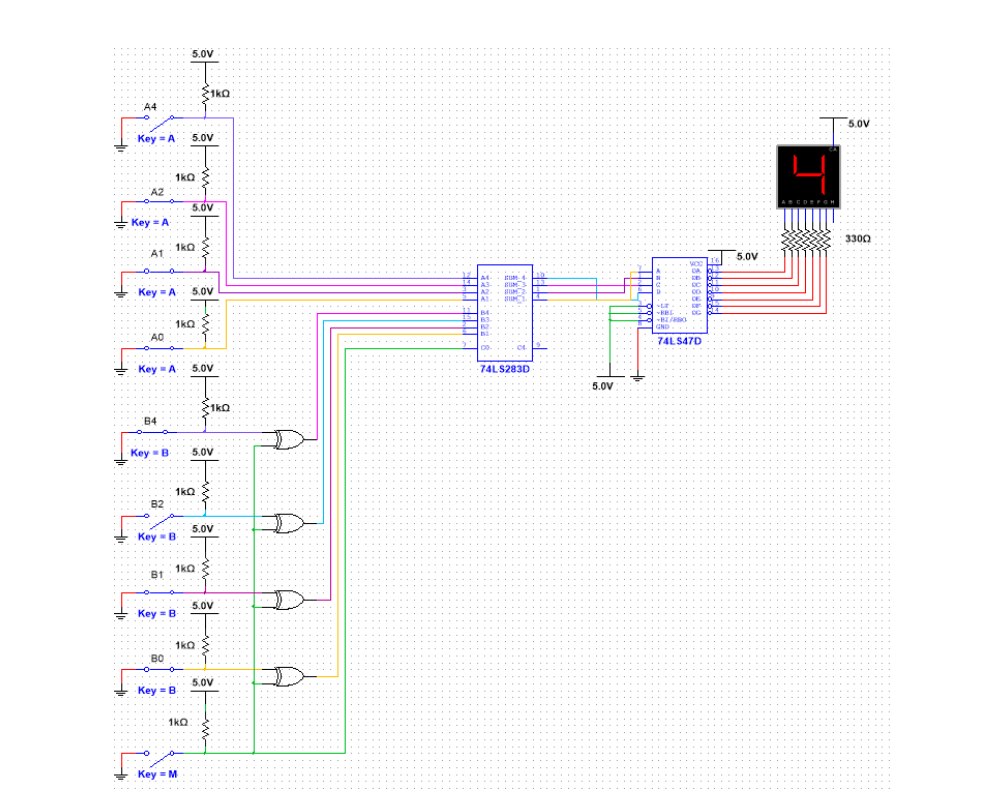
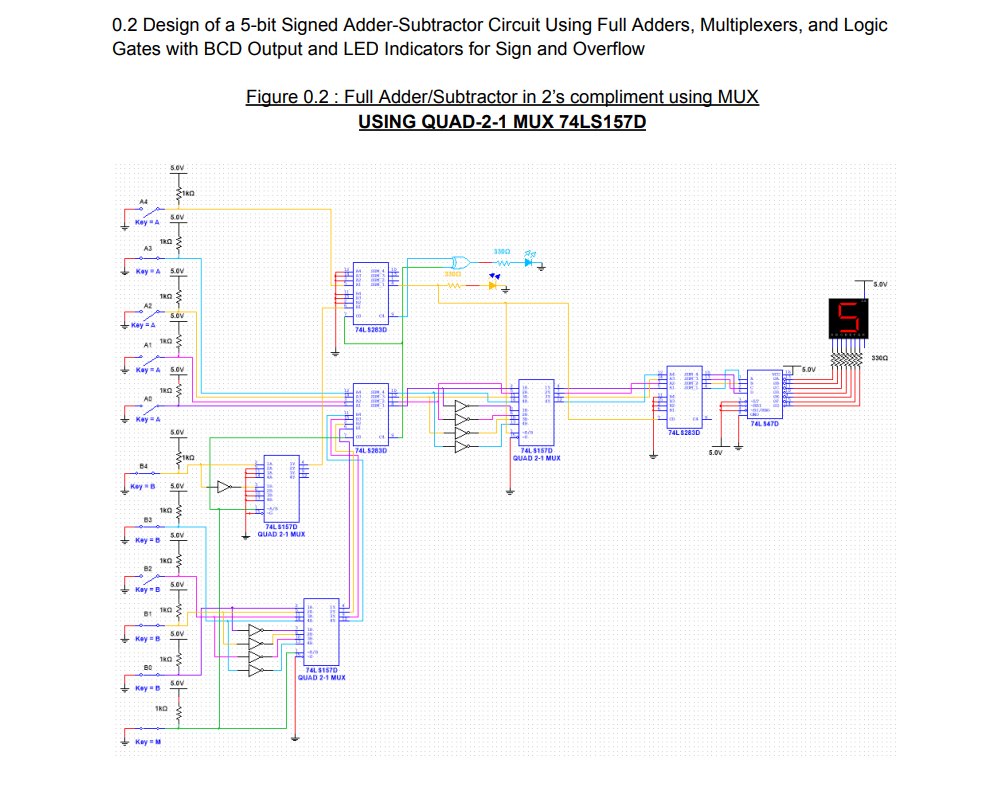
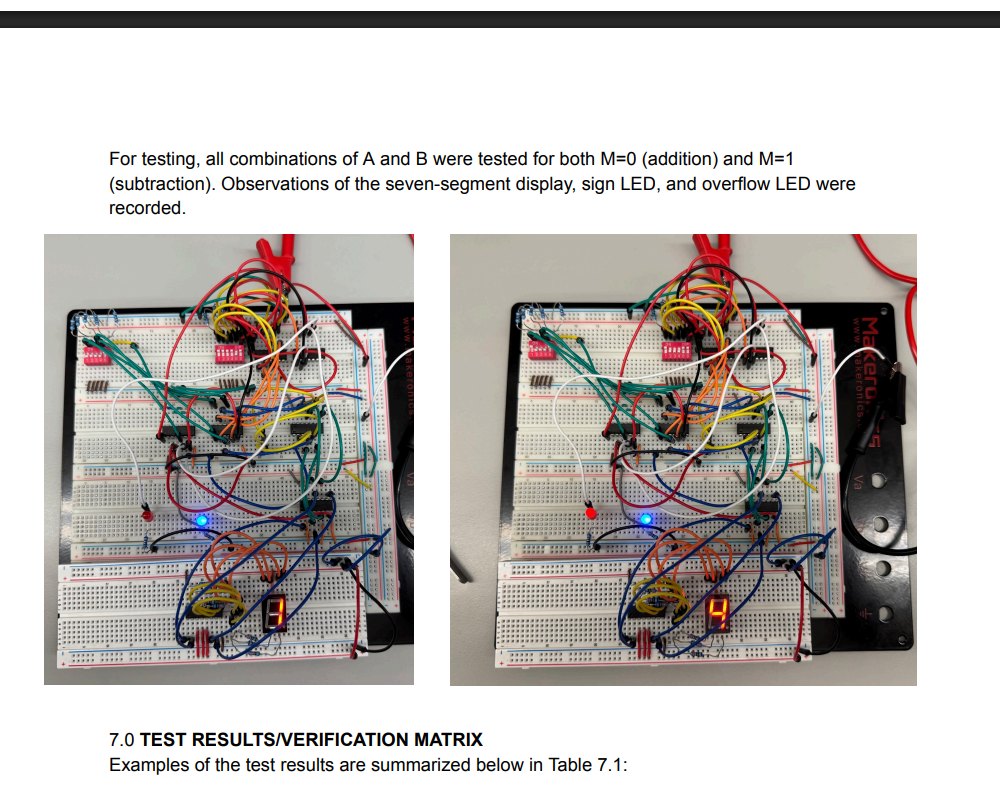
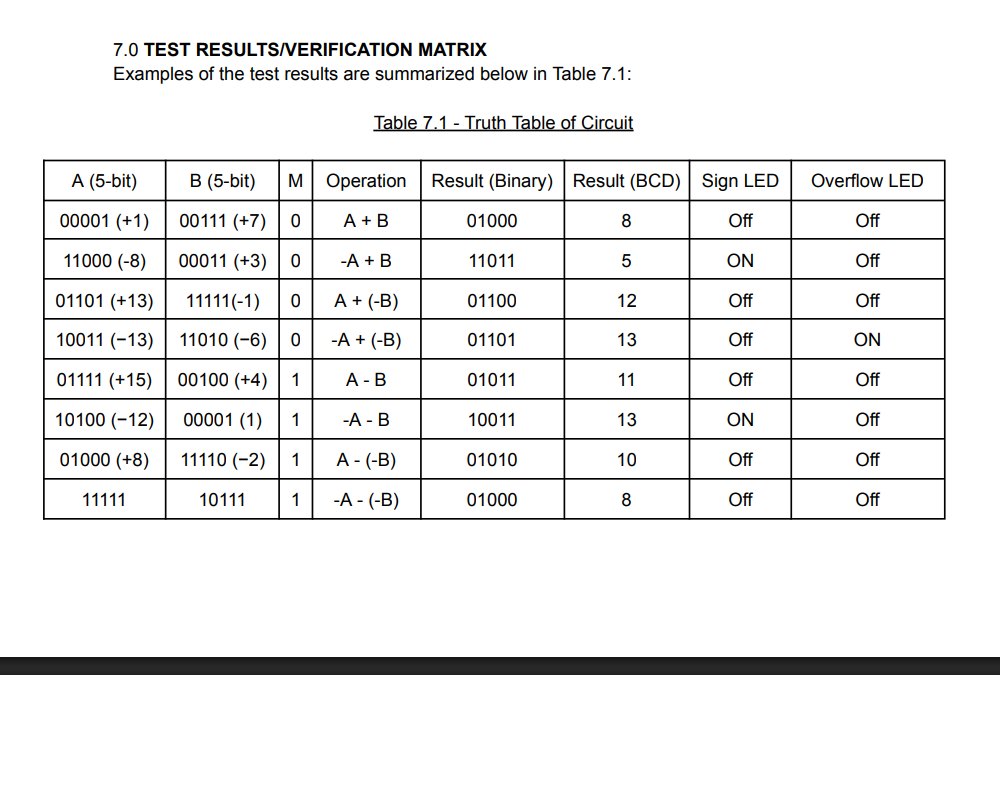
Implemented a signed 5-bit adder/subtractor using cascaded full adders with XOR-controlled inversion for two’s-complement subtraction. Added sign + overflow LEDs and displayed results via BCD on a seven-seg.
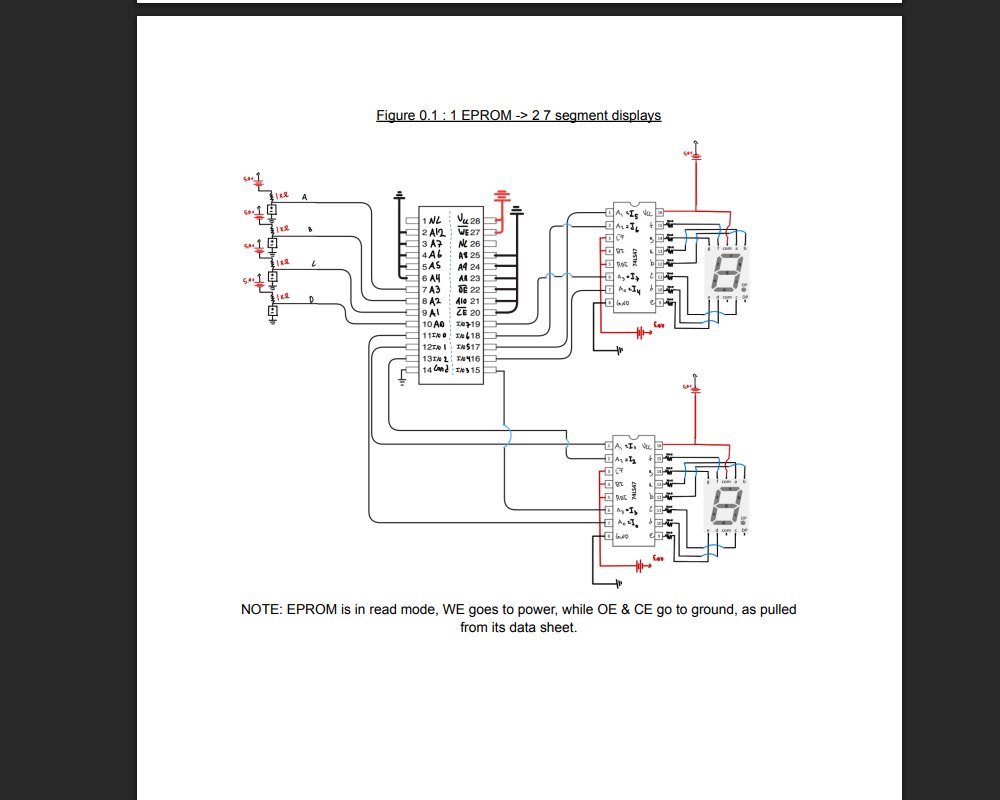
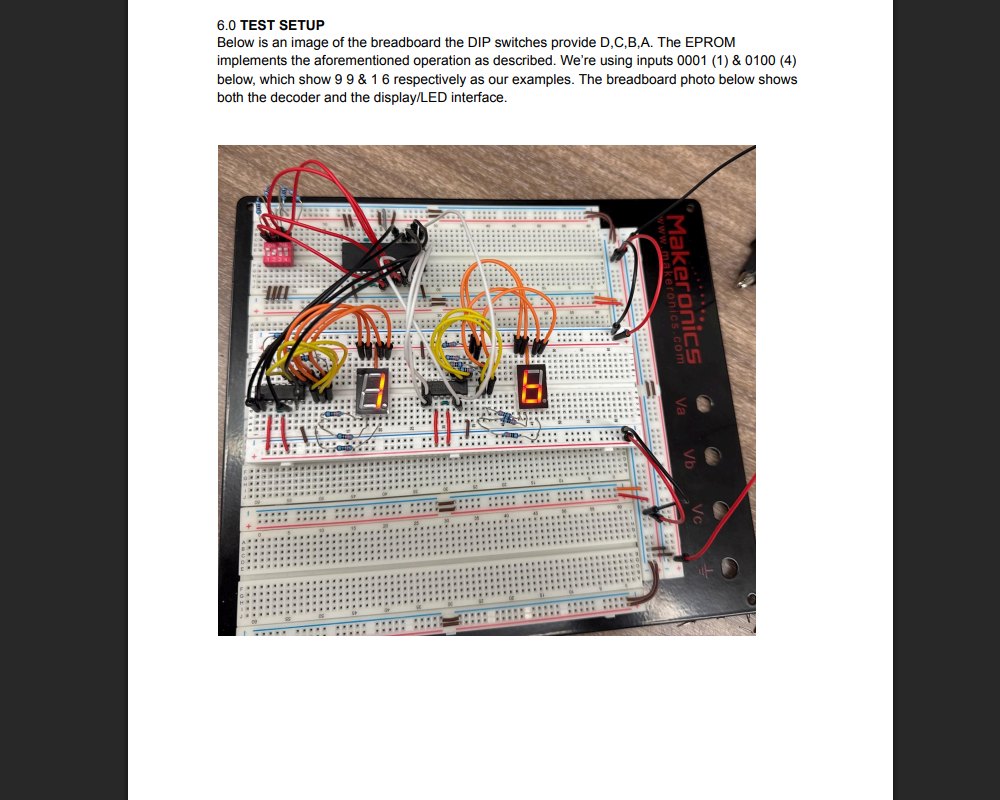
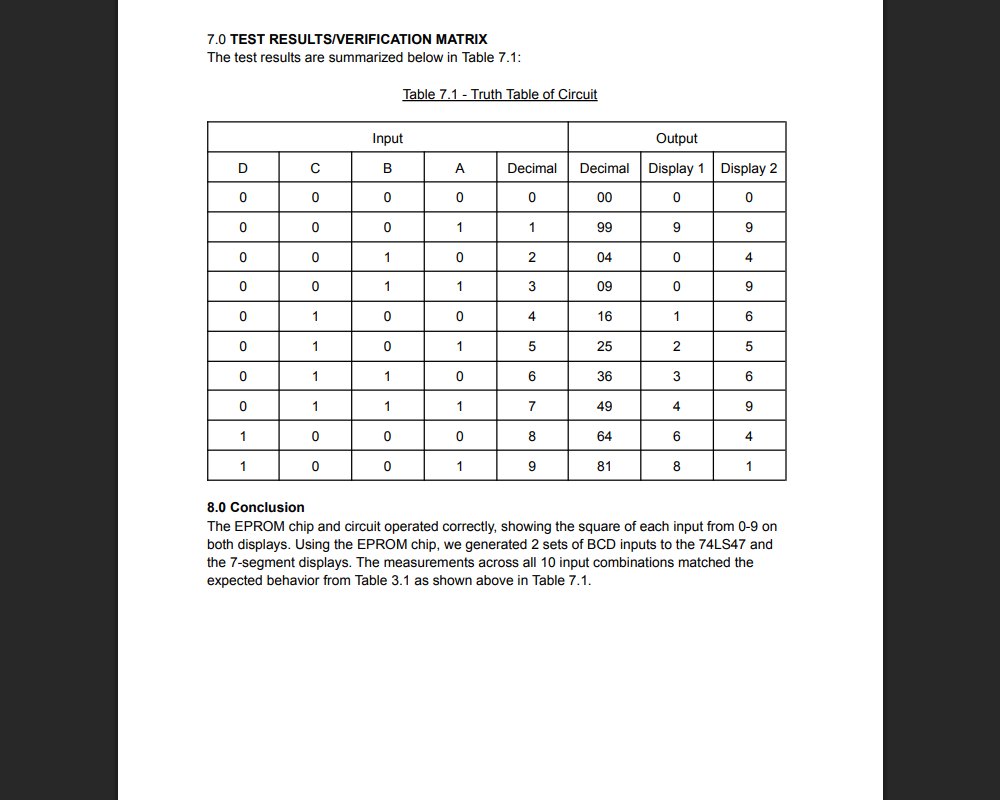
Built an EPROM-based lookup table that outputs the square of a BCD input and drives two seven-segment displays. Verified correct outputs across 0–9 inputs (with the lab’s group-specific mapping).
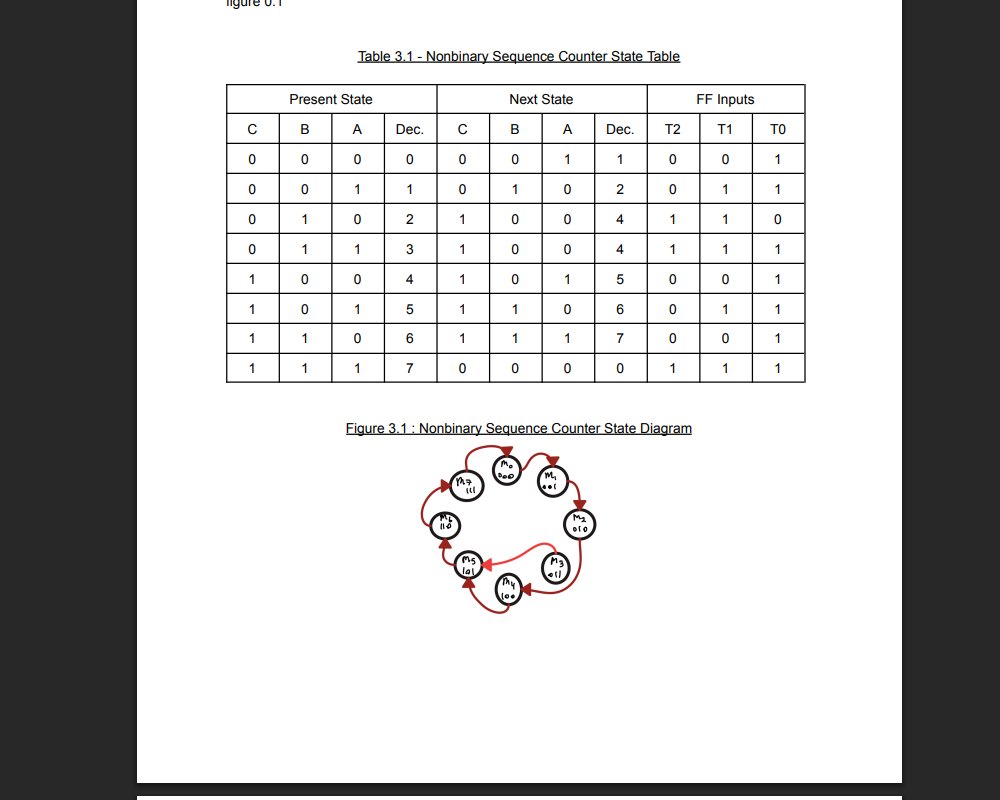
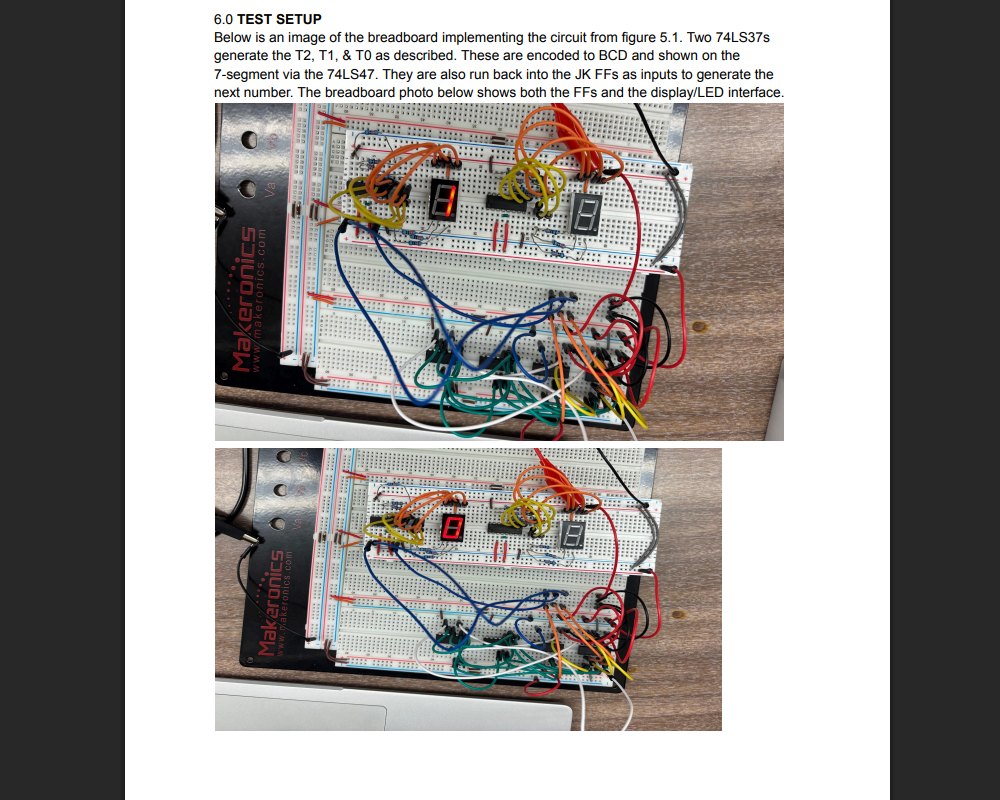
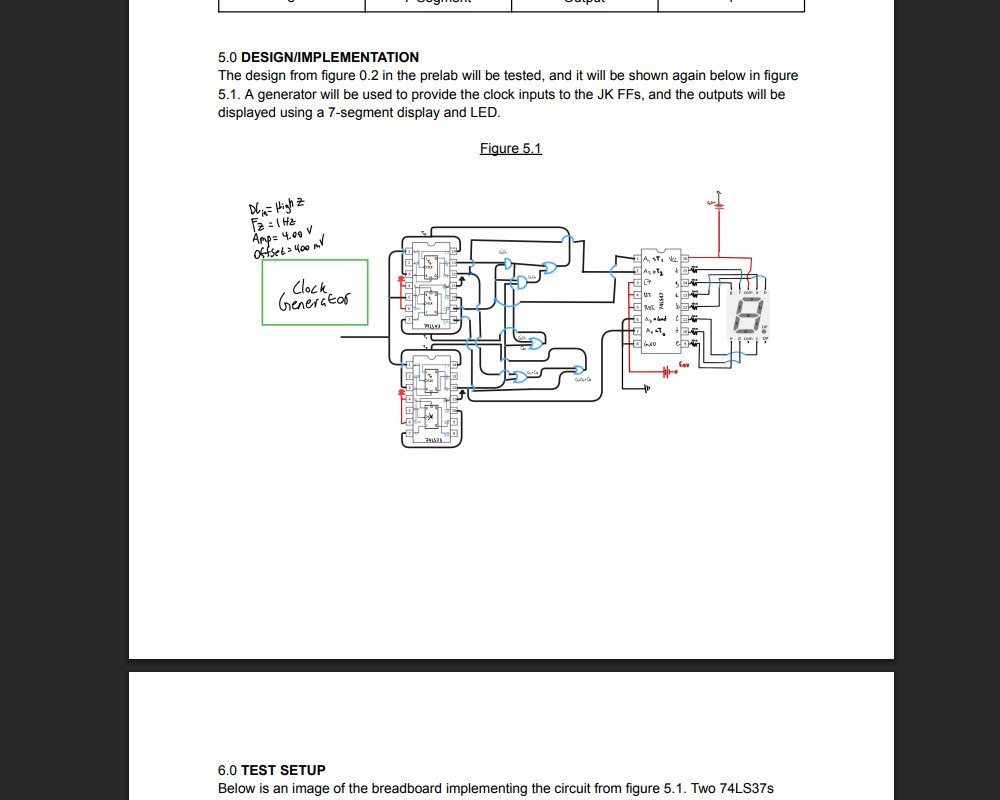
Designed and built a nonbinary counter using T flip-flops (implemented with JK FFs). Derived logic with state table/K-maps and verified the sequence on a seven-seg display, including self-correction behavior.
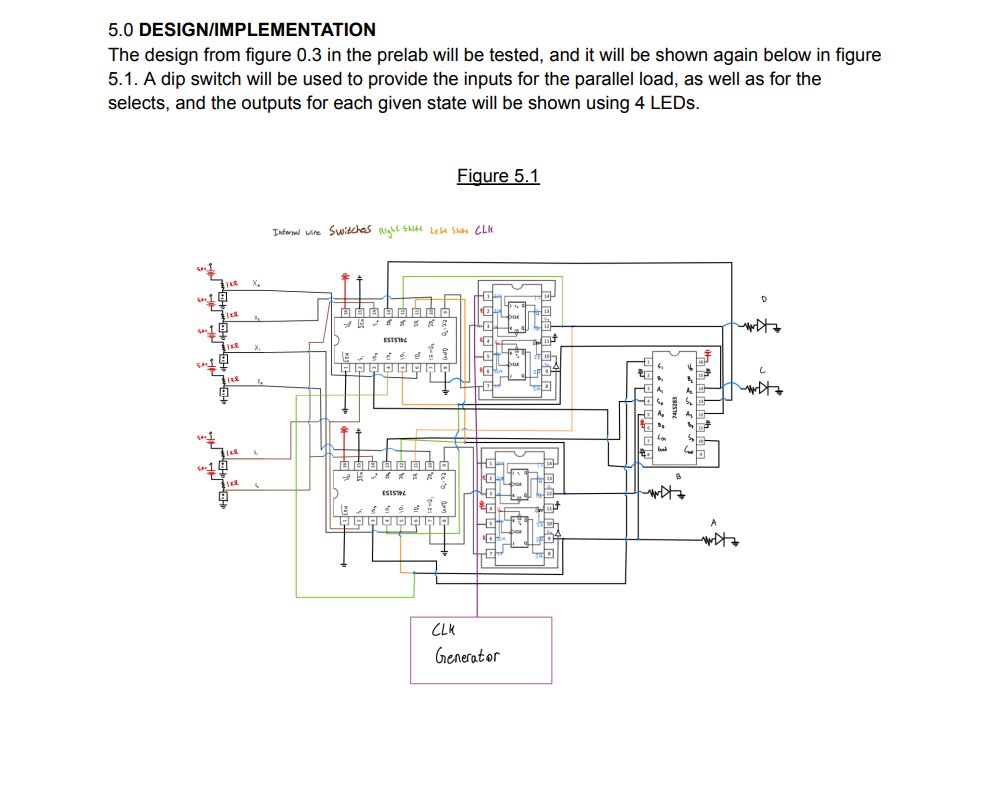
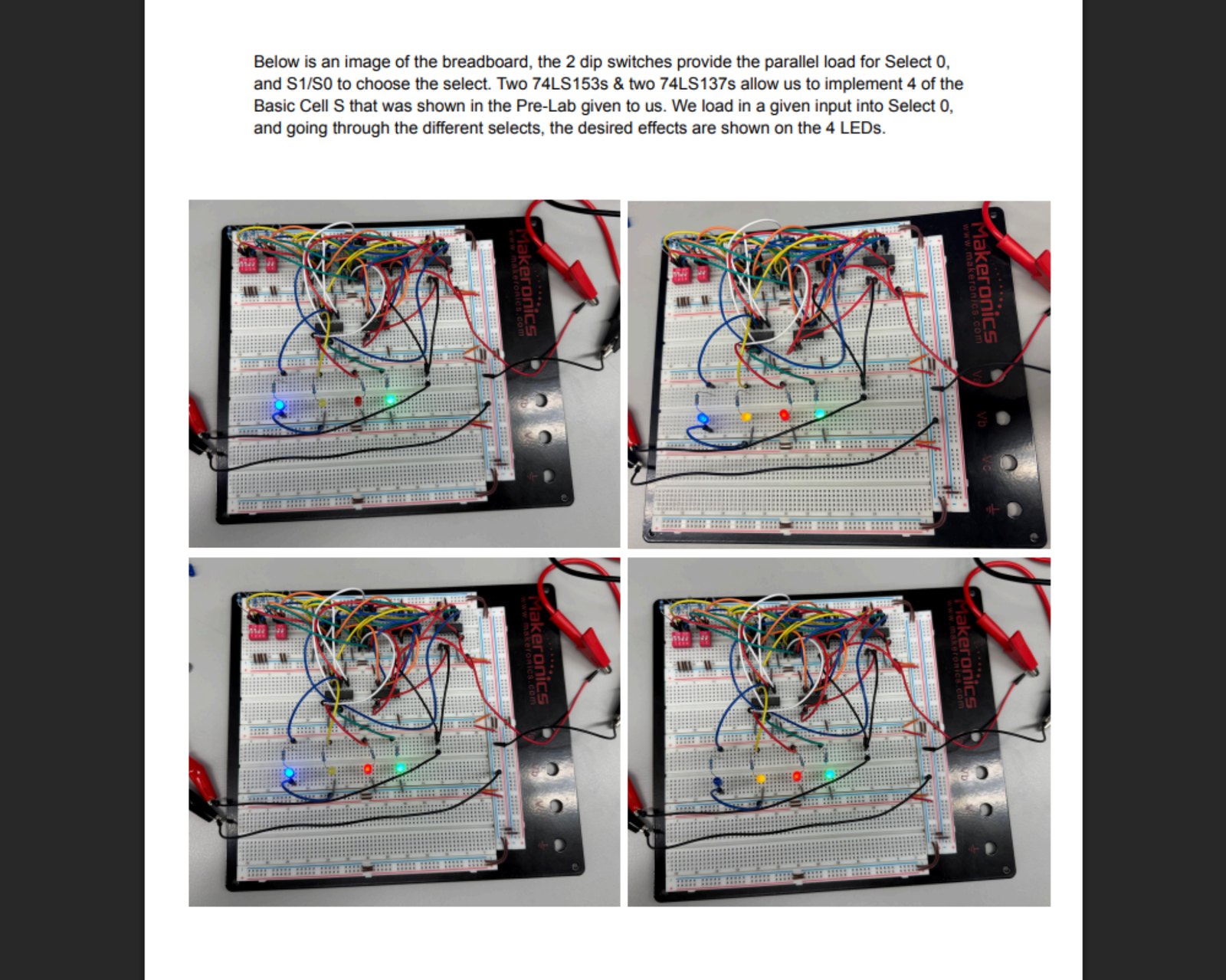
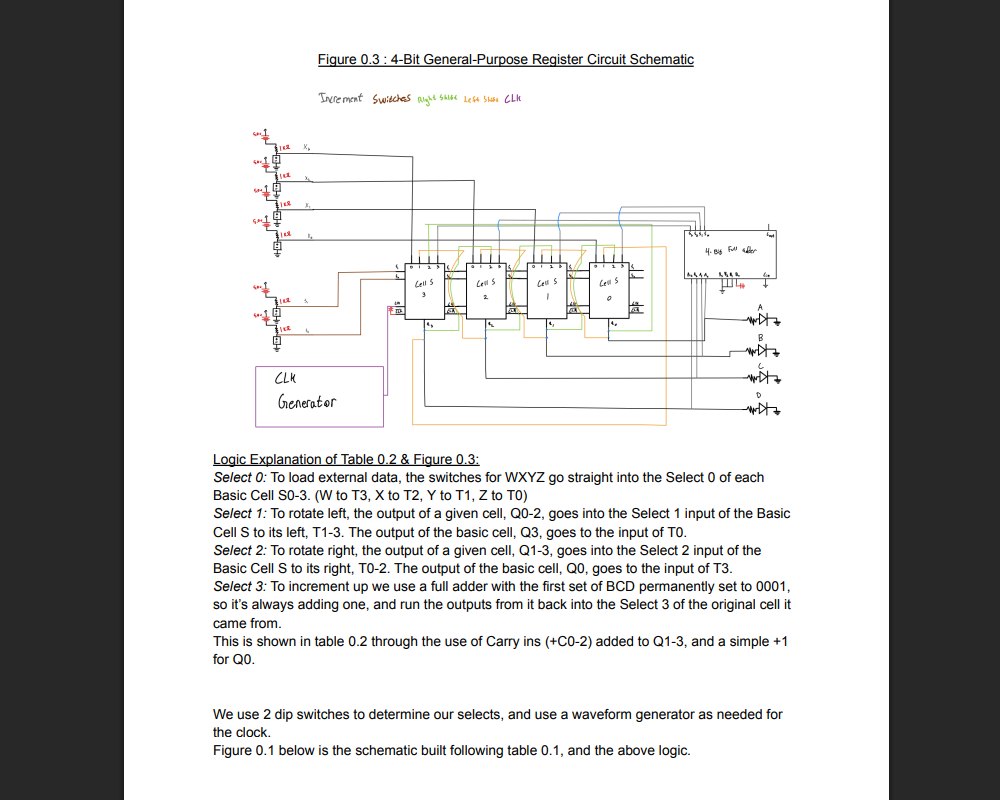
Created a 4-bit register supporting parallel load, rotate-left, rotate-right, and increment operations using multiplexers and flip-flops. Demonstrated each mode on LEDs with switch-controlled selects.
Want to chat about an internship, a project, or a role? Reach out.